

























































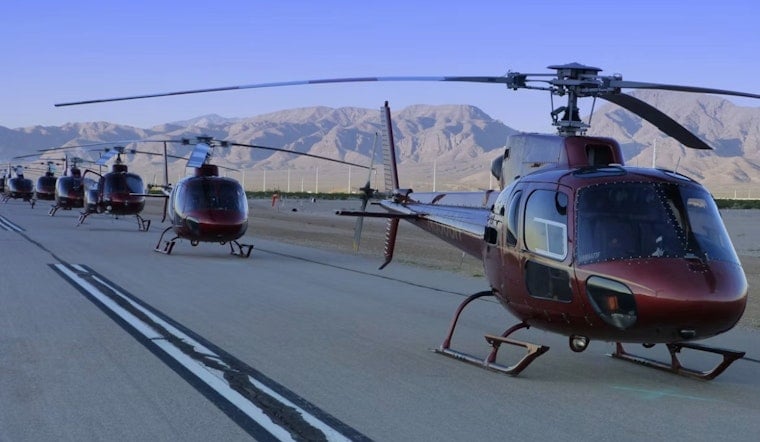
Helicopters are set to buzz the high desert near Mono Lake starting July 8, when federal officials launch a roundup of roughly 450 wild horses that have wandered beyond their designated range. Managers say the goal is to protect fragile wetlands and cut down on dangerous highway encounters, while opponents see the move as the latest flashpoint in a long-running fight over who gets to decide the fate of the herd.
The drive-trap operation will target animals that have drifted outside the Montgomery Pass Wild Horse Territory, a roughly 200,000-acre expanse along the California-Nevada line. Captured horses will be hauled to off-range corrals for processing and possible adoption.
Government contracting and planning files show the Forest Service has scheduled a helicopter-assisted drive-trap gather beginning July 8 to remove about 450 animals, with performance dates listed through July 31 and specific requirements for veterinary care and humane handling. The solicitation and definitive contract are posted on SAM.gov, and the agencies' environmental planning documents are available on the BLM NEPA site. Together, those records spell out how the horses will be driven, where they will be hauled and how they will be prepared for adoption.
How the gather will be carried out
Under the plan, contractors will rely on helicopters and ground vehicles to push bands of wild horses into a large catch pen, then sort and load them for transport. That drive-trap method, described in detail by The Los Angeles Times and in agency documents, uses helicopter-assisted sweeps that officials say are designed to limit stress on the animals and avoid peak foaling season.
At the same time, the tactic is under political scrutiny. Members of Congress have introduced legislation to restrict aerial gathers, including H.R. 3656, available on Congress.gov. That proposal underscores how a remote corner of the eastern Sierra has landed squarely in the middle of a national policy fight over how to manage wild horses.
Why agencies say they must act
Federal land managers point to a 2024 on-the-ground census that counted roughly 700 horses in and around the Montgomery Pass territory, a number they say is far above the area's intended carrying capacity. They also cite damage to shoreline vegetation and bird habitat around Mono Lake.
The Forest Service and the Bureau of Land Management say trampling of sensitive wetlands, coupled with safety risks on nearby highways, justifies the removal under management plans the agencies approved last year. For the agency census and more details on the management rationale, officials refer the public to the Inyo National Forest resource pages and to BLM-Forest Service decision documents available through the agency planning site.
Tribes and advocates push back
Local tribes, including members of the Utu Utu Gwaitu Paiute and Mono Lake Kootzaduka'a communities, have condemned the planned removal, joining conservation groups in calling for alternatives such as tribal stewardship or fertility-control programs instead of large-scale roundups.
Plaintiffs, including filmmaker Carl Mrozek, physician Cherie Tobin, and ecologist Craig Downer, sued last year to block the plan, arguing that the agencies failed to follow required planning steps, as reported by Davis Vanguard. Tobin has told reporters she intends to appeal and will ask a court to halt the gathering, a next step that has been covered in recent reporting.
Court fight and what comes next
The legal battle has already slowed the schedule. According to litigation trackers, a federal court in February denied the plaintiffs' summary-judgment motion and upheld the agencies' decision to remove the horses, effectively clearing a legal path for the operation to proceed.
Agency officials say the gather will be carried out under the procurement and animal-welfare provisions laid out in the solicitation, including veterinary checks, humane handling standards and transport to off-range holding facilities. Under the contract terms posted on SAM.gov, captured horses are slated to be processed and offered for adoption once they leave the range.



