

























































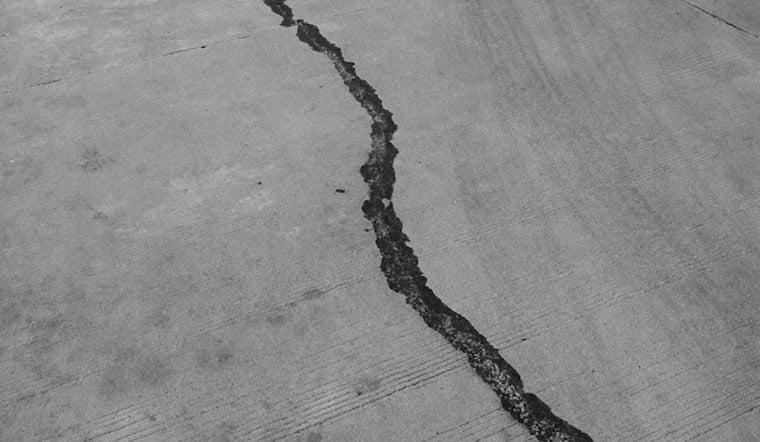
A quiet stretch of the San Andreas Fault near Parkfield is suddenly back in the spotlight. A new peer-reviewed study has pulled out previously hidden, short-duration slow-slip events from years of borehole strain records, and those slips appear to boost nearby low-frequency earthquake activity. The work, which teases faint signals out of the noise with machine-learning tools, is pushing seismologists to rethink how stress moves between creeping and locked fault sections. It is not a prediction of an imminent large quake, but it could nudge hazard models to treat transient stress transfer along California faults a little differently.
Study detects hidden slow-slip events at Parkfield
The paper, published last Tuesday in Nature Communications, ran a deep-learning algorithm on nearly a decade of strainmeter data near Parkfield and flagged dozens of short slow-slip events. The authors report a catalog of 92 events, including a subset of 22 that showed up coherently on three separate borehole strainmeters. After those slips, the team found that low-frequency earthquakes in the area tended to tick upward.
Regional experts weigh in
Harold Tobin, a seismologist with the University of Washington’s Pacific Northwest Seismic Network, walked through the findings in a short video segment for CBS Los Angeles. He said the results raise fresh questions about how stress is passed back and forth between creeping and locked fault zones. Tobin and other West Coast researchers say Parkfield’s behavior now needs to be checked against other stretches of the San Andreas to see whether similar slips are happening elsewhere.
How scientists spotted the signals
The research team leaned on a mix of wavelet transforms and an autoencoder neural network to crank up short-lived strain transients and peel them away from background noise and local quakes. Their source modeling indicates the slow slips were shallow, right-lateral events. The slips follow a moment-duration scaling that looks a lot like ordinary earthquakes, which the authors argue helps link aseismic and seismic fault slip on the same spectrum. According to Nature Communications, the catalog includes 92 slow-slip events and 22 that appeared across all three strainmeters.
Why it matters for hazard models
Globally, slow-slip events have been tied to short-term bumps in earthquake rates in some regions, although the connection to the likelihood of truly large quakes remains murky. A global review concluded that earthquake activity can rise during slow-slip episodes while the overall link to major-quake probability stays uncertain, according to Science Advances. Parkfield sits where the creeping central San Andreas meets more firmly locked sections to the south, which makes it a natural laboratory for testing how transient slips might tweak stress loading in those neighboring locked zones. That question has been a central theme at the Parkfield 2.0 discussions hosted by SCEC.
Next steps and caveats
The authors and outside experts alike caution that the Parkfield signals, while robust, are geographically limited. They say similar patterns will have to be spotted elsewhere and modeled in detail before anyone starts rewriting statewide hazard calculations. Follow-up observations and model tests are already on the agenda for community meetings and government forums, including sessions on low-frequency earthquakes and fault creep at the USGS Northern California Earthquake Hazards Workshop this month, as listed by the USGS.
For Californians, the immediate advice does not change: preparedness, stronger buildings, and tools like ShakeAlert are still the best defenses. What the Parkfield study really offers is sharper scientific questions and a new set of methods to test how brief, aseismic slips fit into the state’s evolving earthquake risk picture.





