

























































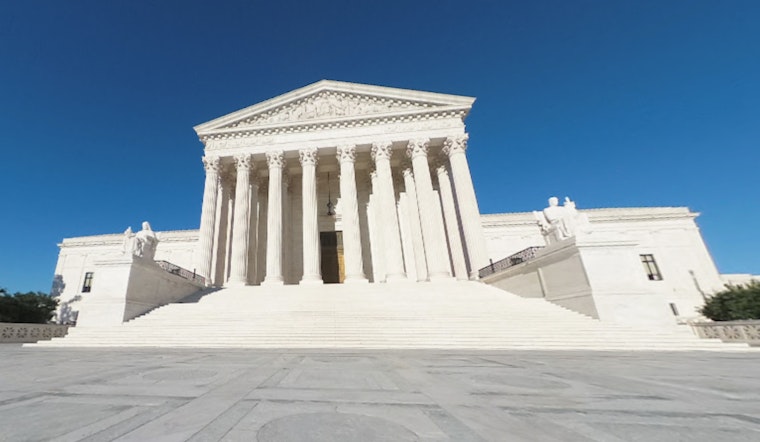
The U.S. Supreme Court on Tuesday handed conservative lawmakers a headline-making win, ruling that states may bar transgender girls and women from competing on girls' and women's school sports teams. By upholding laws from West Virginia and Idaho, the justices effectively blessed a legal framework that will echo through state athletic rules and ongoing lawsuits nationwide. For students, coaches and school districts, the decision reshapes eligibility rules and sends the already heated fight over trans participation back to lower courts and state capitols.
What the court decided
According to The Associated Press, the justices took up two cases, West Virginia v. B.P.J. and Little v. Hecox, and concluded that the bans at issue do not violate Title IX or the Constitution’s equal-protection guarantee. That means West Virginia’s Save Women’s Sports Act and Idaho’s Fairness in Women’s Sports Act stay in place, keeping girls’ and women’s teams limited to what the laws describe as biological females.
How the justices split
Justice Brett Kavanaugh wrote for a 6-3 majority, stating that "The Constitution and Title IX do not require an overhaul of women's and girls' sports throughout America," as reported by Axios. Axios also notes that all nine justices agreed Title IX allows sex-separated teams, but they parted ways over whether the specific bans in West Virginia and Idaho clear the Equal Protection Clause’s bar.
What this means in practice
Legal analysts expect the ruling to surface quickly in lawsuits around the country and to give states that already have similar bans on the books a stronger hand in court. The decisions themselves send the underlying disputes back to lower courts for more work. SCOTUSblog explains that the Court answered the central statutory question while leaving many as-applied factual fights for trial judges to resolve case by case.
Local angle: What this could mean in Ohio
Local outlets quickly picked up on the national ruling and its roots in the West Virginia and Idaho laws. myfox28columbus.com summarized the decision and its immediate reach. For districts and colleges in Ohio and other states, school leaders will now have to sort out how to apply state-level rules and any verification procedures while lower courts sort through individual challenges from transgender athletes.
Legal fallout and next steps
Justice Sonia Sotomayor filed a sharp dissent, joined by Justices Kagan and Jackson, warning that the Court resolved the issue "without fully considering the scientific evidence," according to The Washington Post. Advocates for transgender students say they intend to keep fighting in lower courts and in statehouses, even as schools and athletic associations move to update their eligibility rules to match the new legal reality.





