

























































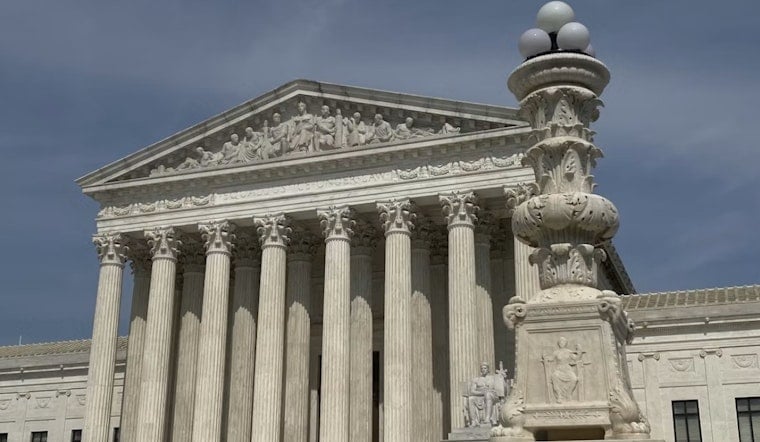
The U.S. Supreme Court has thrown a decades-old Gainesville murder case back into Texas’ court system after Cooke County prosecutors told the justices they no longer trust the conviction they once defended.
Michael Newberry, now 46, was convicted in 1997 of capital murder in the shooting death of 62-year-old Granville Hanks and received an automatic life sentence. He remains incarcerated, and the Supreme Court’s move does not free him. Instead, it forces Texas judges to revisit whether that conviction can still stand.
What the Supreme Court ordered
According to the U.S. Supreme Court docket, the justices on Monday granted Newberry’s petition, wiped out the Texas Court of Criminal Appeals’ prior judgment and sent the case back to that court. The justices told Texas’ top criminal court to take a fresh look at the habeas record and the state’s own review of the prosecution files, specifically in light of the position Texas laid out in an April filing.
How the case reached the high court
Newberry was tried and convicted in 1997 after a Cooke County jury found him guilty of capital murder. In the years that followed, he filed several post-conviction challenges. A visiting judge ultimately recommended a new trial, concluding that the prosecution had suppressed material evidence. That recommendation and the underlying habeas record were detailed by the Gainesville Daily Register.
State review and the Cooke County filing
After that recommendation, Cooke County District Attorney John Warren launched a review and, in an April filing to the high court, reported that his office’s “thorough investigation” found the original trial prosecutor, now-Judge Janelle Haverkamp, intentionally withheld exculpatory evidence. Warren told the justices the State no longer had confidence in Newberry’s verdict.
Those conclusions formed a central piece of the Supreme Court’s decision to send the case back. The respondent’s brief sets out the files, witness statements and transcripts that triggered the office’s review and is available through the U.S. Supreme Court.
What happens next
The Texas Court of Criminal Appeals must now revisit the habeas court’s recommendation in light of the State’s formal confession of error. The court could order a new trial, dismiss the case outright, or again deny relief.
Cooke County officials have previously signaled they would dismiss the prosecution if the Court of Criminal Appeals orders a new trial. For now, Newberry remains housed at the Beto Unit, according to The Texas Tribune. Any new trial or dismissal would kick off more procedural steps and almost certainly more appeals.
Local fallout
The fight over Newberry’s conviction has already scrambled courthouse routines in Cooke County. Haverkamp, who prosecuted the 1997 case, was removed from handling dozens of felony cases and became the subject of mandatory recusal orders tied to the habeas proceedings. Those recusals and related motions have spilled over into other matters in the 235th District Court. Local coverage in the Whitesboro News-Record has tracked how far those ripple effects have spread.
Legal implications
At the center of the case is a Brady claim, the allegation that prosecutors suppressed evidence that was material to guilt. A state confession of error in that context is rare and puts Texas courts in an unusual spotlight.
The Supreme Court’s remand forces the Texas Court of Criminal Appeals to grapple again with the Brady v. Maryland standard and with what to do about a nearly 30-year-old conviction that even the local district attorney no longer defends. The outcome could be anything from a full dismissal to a retrial, with the prospect of further appeals no matter which path the state court chooses.





