

























































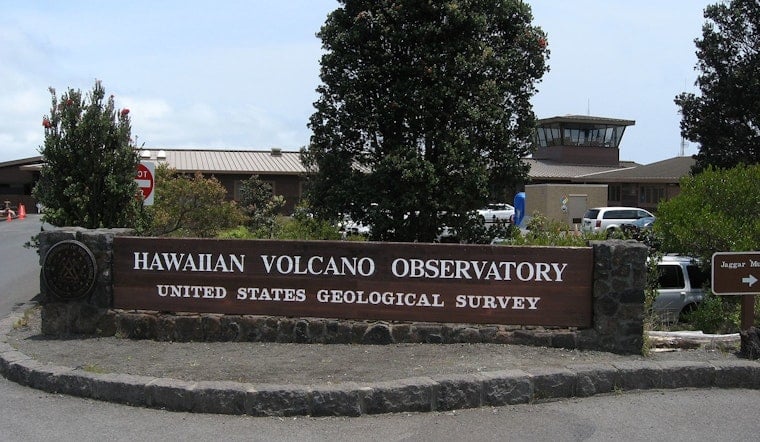
After years of working out of borrowed space, the U.S. Geological Survey's Hawaiian Volcano Observatory is finally getting a permanent home back on the Big Island, with a new research headquarters slated to open at University Park in Hilo next April.
The roughly 60,000-square-foot, two-story complex will bring volcanologists, labs and critical monitoring gear under one roof again, replacing summit facilities that were damaged during the 2018 Kīlauea eruption. Right now, staff and instruments are scattered across rented offices on Hawaiʻi Island. The new headquarters is designed to centralize labs, archives and emergency-response operations, while also opening the door to more internships and hands-on training for local students and researchers through the campus partnership.
According to the Honolulu Star-Advertiser, the Hilo campus sits on about 6.8 acres of state land at the corner of Komohana Street and Nowelo Road and is "set to open in April." A USGS spokesperson quoted by the paper put the total project cost to date at roughly $128 million. Planning documents and local coverage indicate the development will include two main buildings and parking, with the buildout aimed at improving resilience and modernizing volcano monitoring across the Hawaiian Islands. Big Island Now has previously reported that the field station and Hilo research center were projected within a 2026–2027 completion window.
What's on the new campus
Design plans call for a two-story research building with dedicated lab space, offices and an observation deck, paired with a smaller warehouse and field-support facility to link lab work with field operations. The Hilo facility will be shared with the USGS Pacific Islands Ecosystems Research Center and backed up by a separate field office in Hawaiʻi Volcanoes National Park for rapid response near Kīlauea.
The project was designed by AHL Architects Hawaii, while Hensel Phelps is listed as the construction contractor in federal procurement filings. UH Hilo and ConstructConnect outline the building program and how the shared spaces are expected to function once the doors open.
Why the move matters
Officials say the new campus should speed up and sharpen the scientific analyses that feed into community warnings and airspace management during eruptive activity. In a press release, Department of the Interior and USGS leaders also pointed to the building's role in training future scientists and strengthening research partnerships with UH Hilo.
The permanent Hilo headquarters is being framed as a safer, more resilient base of operations than the observatory's former summit buildings, which were damaged beyond repair during the 2018 Kīlauea eruption. Materials from the Department of the Interior and USGS describe the move as part of a broader effort to harden critical monitoring infrastructure across the islands.
Timeline and funding
Local reporting and federal documents sketch out a staggered construction timeline. The field station inside Hawaiʻi Volcanoes National Park has been reported as being closer to completion than the Hilo headquarters, with earlier coverage projecting field workspaces to be finished in 2026 and the main Hilo facility in 2027.
The buildings are financed through the Additional Supplemental Appropriations for Disaster Relief Act of 2019, which steered federal aid toward recovery after the 2018 Kīlauea eruption. USGS officials have cited different cost breakdowns in public materials; some reporting and project documents point to combined estimates in the high tens of millions of dollars and a project-to-date figure of around $128 million. Big Island Now and project filings provide that funding context.
What's next
For now, volcanologists and support staff remain in temporary offices in Hilo while monitoring equipment and networks keep watch across the island and inside the park. USGS says work will continue on interior finishes and building systems, and local officials expect the new center to expand student training opportunities and community outreach once staff move in.
The agency has not released a detailed, day-by-day move schedule, but public reporting indicates staff could begin occupying completed portions of the building in the months after formal completion. The USGS Hawaiian Volcano Observatory site continues to post ongoing monitoring updates while the transition plays out.





,_Hawai%CA%BBi_Volcanoes_National_Park,_Hawaii_(4528768779).jpg)