

























































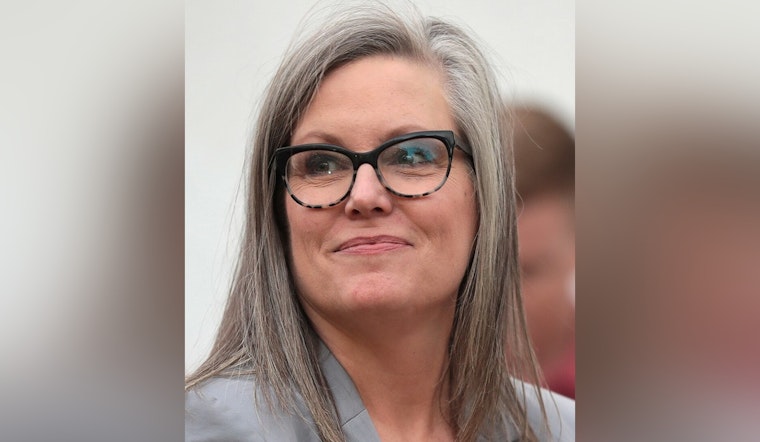
Gov. Katie Hobbs is back on Arizona screens with a new 30-second TV spot and a multimillion-dollar statewide ad buy that her campaign says is meant to reintroduce her to voters as she seeks a second term. The commercial leans hard on Hobbs’ working-class roots and a short list of policy wins credited to her time in office. We fact-checked the script and found most of the claims grounded in reality. Several, though, need more explanation than a half-minute ad can offer.
The campaign rolled out the English- and Spanish-language ads online and billed them as the start of a broad effort to reach voters across the state, according to Katie Hobbs' campaign. The English spot, titled “Work,” opens with Hobbs saying her family “didn’t make a lot of money,” then pivots to a highlight reel of policy points her team ties to her tenure.
Working-Class Story Checks Out
The claim that Hobbs worked “regular jobs” holds up. Reporting shows she put in time at a Burger King in Tempe and a Pizza Hut in Flagstaff while she was in school, and that she briefly drove for Uber while serving as a state senator, according to Phoenix New Times. National party outlets and political allies have leaned into that same blue-collar framing as the ads hit the air, per the Democratic Governors Association.
Budget And Education Claims: True, With Asterisks
The ad’s broad line that Hobbs “balanced the budget” is rooted in a narrower reality. State budgets have been passed in each year she has been governor, and the Joint Legislative Budget Committee’s analysis shows FY2025 general-fund collections roughly in line with the enacted budget, according to the JLBC. One-time revenues and shifting federal reimbursements, however, make the long-term picture more complicated than the ad suggests.
On schools, the state set aside $3.8 million in FY2025 to cover reduced-price meal copays for eligible families. The Arizona Food Bank Network reports that funding covered more than seven million meals, according to Arizona Food Bank Network. Advocates for child nutrition count that as a meaningful move, even if it is a relatively small line item in a large and sometimes volatile state budget.
Housing And Water: Wins, Losses And Lawsuits
On housing, Hobbs signed laws this session that require many cities to allow accessory dwelling units and, for municipalities above a certain population threshold, to permit “middle housing” types such as duplexes and four-plexes. The measures are on file with the Legislature as HB2720 and HB2721.
The water story is less tidy. The administration’s push to tighten assurances about 100-year water supplies led the Arizona Department of Water Resources to pause some new subdivision certificates, and homebuilders sued. A Maricopa County Superior Court judge later blocked ADWR’s “unmet demand” approach. Local reporting has tracked the legal back-and-forth in detail; see coverage from KJZZ.
Energy Relief And Efficiency
The Hobbs team also points to two programs with direct impact on household bills. In April, the Arizona Department of Economic Security launched Power AZ with an initial $15 million investment to expand utility-bill assistance to households earning up to 100% of the state median income, according to DES.
Separately, federal-backed and state-run rebate programs are being delivered in Arizona through an Efficiency Arizona framework that steers incentives toward heat pumps and whole-house energy upgrades. State and national energy groups say those rebates can total thousands of dollars per qualifying household. See NASEO for program overviews.
Legal And Political Stakes
The ADWR court fight and new housing mandates are already showing up in campaign talking points. Republicans argue the water rules put the brakes on homebuilding, while the administration counters that it is protecting long-term supplies and plans to challenge the judge’s ruling. That divide gives both parties ready-made lines as the ad runs and campaign season heats up, according to reporting by the Arizona Mirror.
The bottom line: the spot stops short of outright fabrication, and most of the biographical and budget claims can be verified. The tradeoff is that complex budget choices, education funding decisions and water policy battles are squeezed into quick slogans. Voters who want the full story will need to dig into the budget documents, DES program pages and local reporting cited here.





