

























































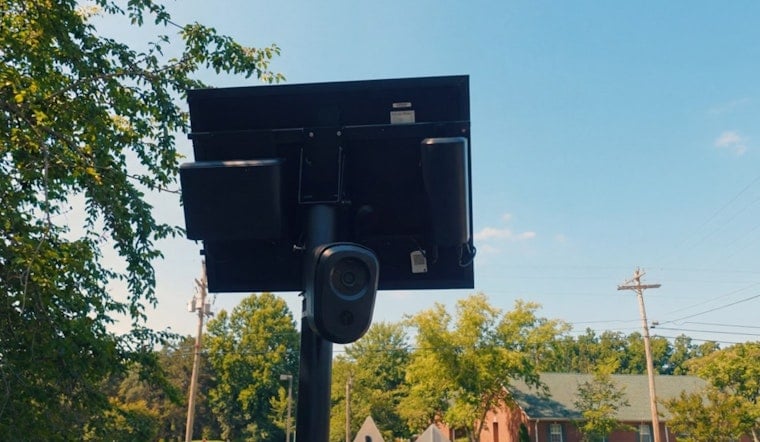
Tempe police will stop sharing data from its Flock automated license plate readers with any outside agency, city officials announced Tuesday, a move that follows a string of misuse scandals at nearby departments even though Tempe says its own audits have turned up no wrongdoing. The cameras themselves are staying in place, but the outward data pipeline is being shut down, and a new public transparency portal is going live to show residents how the system is used.
Tempe officials cited privacy concerns and recent misuse incidents involving other local law enforcement agencies as the reason for the change, according to FOX 10 Phoenix. The department previously restricted its Flock data sharing to Arizona law enforcement agencies only, but is now cutting off that access entirely. Tempe Police Chief Ken McCoy said the additional restrictions will safeguard the city's data and help the department maintain control over who can access it, per the station's report.
The timing is no coincidence. Just days earlier, the Apache Junction Police Department announced that an officer, Joshua McDaniel, resigned after an internal investigation found he had used license plate reader technology to locate his wife for personal reasons — a case Hoodline detailed in our earlier coverage of the resignation. Apache Junction Police Chief Michael Pooley said the incident harmed trust in both the department and the community it serves, and department officials said McDaniel would have been fired had he not stepped down first, the same account notes.
Chandler's Audit Flagged the Same Kind of Misuse
Chandler faced its own reckoning just before Tempe's announcement. The city launched an internal investigation into potential misuse of Flock technology and, on August 7, announced it would part ways with the camera vendor entirely, a decision that followed months of public pushback over the program's cost and scope. Hoodline reported in May that Chandler residents packed a city council meeting to protest a proposed $153,400 Flock contract renewal months before the misuse was ever uncovered, in our report on that contentious council fight.
According to KTAR News, Chandler's decision to exit the platform came after Flock's own “Audit Assistance” software tool automatically flagged an anomaly in how a department employee was accessing license plate data. Chandler Police Chief Bryan Chapman said no one's privacy had been compromised as part of the potential misuse, according to FOX 10 Phoenix's report.
Tempe Says Its Own System Has Stayed Clean
Tempe conducted its most recent Flock system audit on August 7 and found no misuse, the department said, echoing the results of previous audits that also turned up nothing improper. City officials say the Tempe Police Department has never used Flock Safety data for purposes other than law enforcement. Under the department's internal protocols, officers must enter a valid police report number for every search, and administrators review those searches during monthly audits to confirm law enforcement necessity, according to YourValley.net.
Those cameras aren't sitting idle, either. Tempe's Real Time Operations Center, launched in the summer of 2024, integrates Flock license plate readers with traffic cameras and 911 dispatch, and it had generated more than 1,200 investigative assists by August, according to reporting from ABC15 Arizona. That scale of use appears to be why Tempe is choosing to restrict outward data sharing rather than dismantle its network the way Chandler did.
New Transparency Portal, New Bidding Process
Tempe has launched a new transparency portal that displays live data and usage metrics, showing residents how the technology is governed and operated day to day. The city also plans to hold another round of bidding for an automated license plate reader vendor, and officials say the new contract will include penalties for vendor misuse of data, along with a request for proposals seeking the product offering the strongest data security and best public safety options.
Even with Tempe's citywide data-sharing shutdown, license plate surveillance hasn't disappeared from city limits. Arizona State University Police continue to operate an independent network of roughly 20 Flock cameras across its Tempe campus, a setup that has been in place since 2022, according to 12News. That overlap means a citywide policy shift doesn't necessarily isolate Tempe residents from every camera network operating within the city's borders.
A Regional Retreat From Flock
Tempe's move lands amid a broader pullback from Flock technology across Arizona. Pinal County Sheriff Ross Teeple directed staff to terminate the county's contract for roughly 200 Flock cameras in unincorporated areas when it expires in September, citing Fourth Amendment concerns over the technology's pattern-tracking capabilities — a decision Hoodline covered in our report on the sheriff's cancellation. Farther north, the Sedona City Council voted unanimously in September 2025 and the Flagstaff City Council followed in December 2025, both permanently eliminating their ALPR camera programs, according to KNAU Arizona Public Radio.
Part of why individual cities are left crafting their own rules is legislative inaction at the state capitol. An Arizona Senate bill sponsored by Sen. Kevin Payne that would have set statutory limits on ALPR data retention and penalized unauthorized access stalled earlier this year after pushback over public records exemptions and constitutional loopholes, per Route Fifty. Without state guardrails in place, departments like Tempe's have been setting their own audit standards and contract penalties.
Flock Safety itself has pushed back on the wave of cancellations. Trevor Chandler, the company's Senior Director of Public Affairs, said in an interview Tuesday that Flock cameras do not use facial recognition, retain unevidentiary data for only 30 days, and include automated auditing tools designed to flag misuse, according to KTAR News. Civil liberties organizations have reported that Flock Safety operates more than 120,000 cameras scanning 20 billion vehicles monthly nationwide, while at least 47 U.S. municipalities have canceled or declined to renew Flock contracts over privacy concerns.





