

























































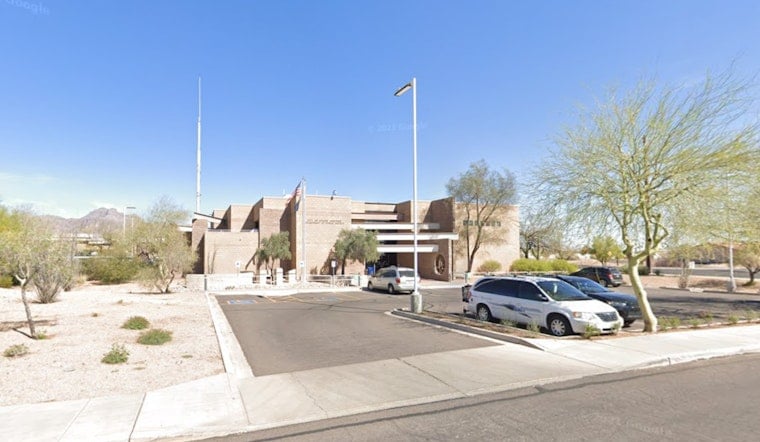
An Apache Junction police officer has been placed on administrative leave after department dispatchers grew suspicious of a request to run a family member's license plate, triggering an internal investigation into misuse of the agency's automated license plate reader technology. Apache Junction Police Department officials say the officer's use of the system was improper and unrelated to any authorized law-enforcement investigation or official police business.
According to FOX 10 Phoenix, the officer asked two Apache Junction police dispatchers to run a relative's license plate, and the dispatchers recognized concerns about the circumstances of the request and notified their supervisor. The department says the officer represented the request as related to a welfare check. From there, the matter was elevated through the department's chain of command, and the department began an internal investigation into the officer's use of law-enforcement technology.
The situation escalated when the same officer later asked a separate law enforcement agency to run the family member's plate again, disclosing that automated license plate reader, or ALPR, technology had been used to locate the relative within that agency's jurisdiction. That outside agency independently contacted investigators about the request and then notified Apache Junction police, according to the FOX 10 Phoenix report. Apache Junction Police Department has since completed its internal investigation and announced a news conference on the matter for 1 p.m. Monday.
A Regional Pattern of ALPR Misuse Comes Into Focus
The Apache Junction case lands amid a wave of similar controversies rippling across Arizona's East Valley. The Chandler Police Department launched its own internal investigation on Friday after detecting what spokesperson Bryan Chapman described as a potential misuse of its Flock license plate reader system by someone within the organization, according to FOX 10 Phoenix. The city of Chandler has since announced it will discontinue use of Flock cameras altogether, a move confirmed by 12News.
Days earlier, in North Carolina, a police officer was arrested after allegedly using license plate reader cameras to track her boyfriend's ex-wife, with an internal audit finding she had accessed the database 31 times for personal purposes, per the FOX 10 Phoenix report. That case fits into a much larger national picture: an August investigation by The Washington Post found at least 50 law enforcement officers nationwide have been charged or accused of misusing ALPR systems for personal reasons, with 46 of those cases involving Flock Safety databases, and more than half involving officers tracking ex-partners or romantic acquaintances.
County Sheriff Already Pulled the Plug on Flock
The timing puts Apache Junction's police department in an uncomfortable spot, since Pinal County Sheriff Ross Teeple had just announced he was terminating his own agency's contract for roughly 200 Flock ALPR cameras, citing Fourth Amendment privacy concerns and mass surveillance risks. Hoodline previously reported that the sheriff's move, which covers unincorporated areas surrounding Apache Junction, came days before the misuse case went public.
Apache Junction's own relationship with Flock cameras runs deep. The city council approved a five-year, $315,500 contract with Flock Group Inc. in June 2023 to expand its network to 25 pole-mounted cameras, building on 15 cameras installed the year before, according to YourValley.net. In a March 2025 presentation, Apache Junction Police Chief Michael Pooley told the city council the system had contributed to 14 arrests, the recovery of 19 stolen vehicles, and nearly $400,000 in recovered assets during 2024, according to the Pinal Post.
Statewide Backlash and Legal Exposure
Apache Junction is far from alone in facing scrutiny over the cameras. Sedona and Flagstaff have both voted to remove their Flock systems entirely amid privacy concerns, while Arizona lawmakers debated Senate Bill 1111 earlier this year, a measure that would restrict ALPR usage to legitimate investigations, require trackable case numbers, and classify unauthorized database access as a Class 6 felony.
Under Arizona Revised Statutes § 13-2316, accessing law enforcement databases without authorization or beyond permitted scope already constitutes computer tampering, a felony offense under state law, according to the Arizona Daily Independent. Officers convicted under the statute face criminal charges and can lose their peace officer certification through a review by the Arizona Peace Officer Standards and Training Board, which has previously revoked credentials in similar cases.
Vendor specifications for Flock Safety require every ALPR search to log a documented case reason for audit purposes, with stored camera data set to automatically delete after 30 days, according to 12News. It was that kind of built-in audit trail, paired with dispatcher vigilance, that appears to have caught the Apache Junction officer's request before it went further. Apache Junction police have not released the officer's name or specified what discipline, if any, will follow the completed internal investigation.





