

























































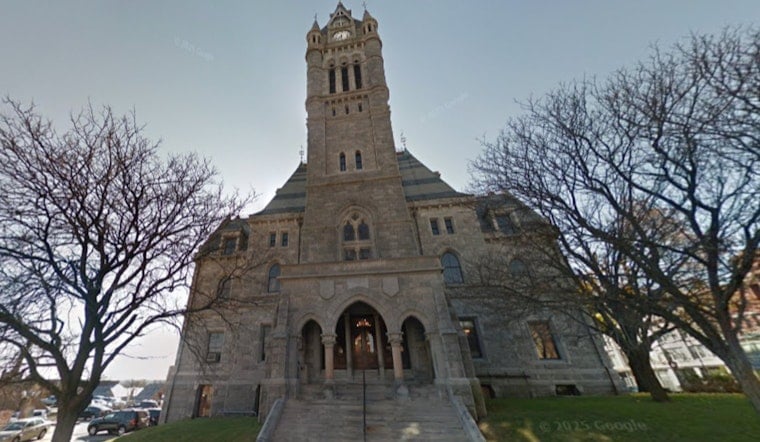
Holyoke City Hall turned into ground zero in the state’s AI debate Tuesday night, as the City Council voted to ban high-powered artificial-intelligence data centers across the city, cutting off a proposed mega-project in the Flats and instantly rewriting the local development playbook. After weeks of public meetings and a rally on the steps outside, councilors approved a citywide prohibition on new AI data centers that would draw more than 12 megawatts of power. Supporters in the audience applauded the move, while opponents warned it could kill a redevelopment plan they said would bring badly needed tax revenue and jobs. The decision makes Holyoke the first municipality in Massachusetts to adopt this kind of restriction.
The ordinance passed on a 9–4 vote and blocks any future AI data-center projects above the 12 MW ceiling. City Council President Tessa Murphy‑Romboletti joined three colleagues in voting no, arguing Holyoke should slow down and write tighter rules instead of locking in a permanent ban. The debate and vote were first detailed by Athol Daily News.
Project Pitched For 100 Water St.
The immediate flashpoint was a plan from developers with Chestnut River Power and Infrastructure, who wanted to convert a vacant industrial building at 100 Water St. into a roughly 20‑megawatt AI-focused facility. They framed it as a big-ticket adaptive reuse of mill space: about a $200 million private investment that, by their estimate, could generate roughly $2 million a year in property tax revenue.
Company representatives told city officials the operation would rely on a dedicated service agreement with Holyoke Gas & Electric, cover the full cost of its electricity and avoid shifting any burden onto other HG&E customers. Preliminary engineering pointed to cooling demands of about 250,000 gallons of water a day to keep the server racks from overheating. “We’re still taking in the council’s decision and want to review it carefully before we say more,” a representative said, as reported by Athol Daily News.
Existing Computing Hub And Local Utility
Holyoke is no stranger to heavy-duty computing. The Massachusetts Green High Performance Computing Center on Bigelow Street already anchors a cluster of research infrastructure in the city, and local officials often point to it as proof that large-scale computing can be done with community oversight and benefits that flow back into Holyoke.
The city’s municipal utility, Holyoke Gas & Electric, and the canal system feeding it have long been the calling card for tech and manufacturing recruiters, thanks to relatively low-cost, locally controlled power and city-owned fiber. For more on how that setup works and how the MGHPCC fits into it, see MGHPCC and coverage in BusinessWest.
Why Neighbors Pushed Back
Residents who opposed the Water Street project told councilors they were less dazzled by the investment figures and more worried about everything that could come with a massive AI buildout. Speakers flagged potential impacts on the Connecticut River, pressure on Holyoke’s water and power systems, constant operational noise from a 24/7 facility and new avenues for large-scale data collection they did not feel the city was ready to regulate.
Those worries brought dozens of people into public comment sessions and fueled a rally outside City Hall, where residents urged councilors to put environmental and public-health safeguards ahead of speculative tax gains. Inside the chamber, the council split between members who preferred a temporary moratorium to keep talking and those who argued only a full ban would give Holyoke clear control over its energy and land use future.
How Other Massachusetts Towns Are Responding
Holyoke’s move drops into a growing patchwork of local controls on data centers across Massachusetts. Lowell adopted a 360‑day moratorium on new facilities in January so it could study how they affect local infrastructure. In May, Mansfield voters backed a zoning change that effectively blocks large data centers there.
Policy and legal analysts tracking the trend say communities are leaning on moratoria and zoning tweaks as their main tools to force more disclosure on power demand, water use and noise before greenlighting any big projects. For broader context on those strategies, see summaries from Foley Hoag and reporting by Boston.com.
What’s Next
The new ordinance is not entirely out of the woods yet. It could still land on the mayor’s desk for a veto, and if that happens the council would have the option of attempting an override.
Chestnut River has not filed formal permit applications or closed on the Water Street property, and the company says it will evaluate its options in light of the vote. City staff, meanwhile, are expected to look at whether the hard cap on large AI data centers should be paired with more targeted zoning or regulatory language for smaller or research-scale computing hubs.
For now, the Holyoke decision has vaulted the city into the center of a statewide fight over how to juggle economic development, climate-conscious infrastructure planning and residents’ comfort with AI’s physical footprint in their backyard.


