

























































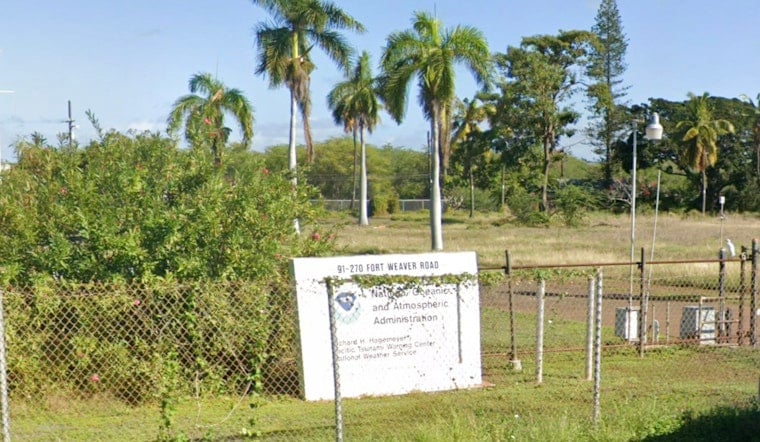
Honolulu emergency officials were on alert Sunday night into Monday as they watched for possible tsunami impacts after a powerful earthquake struck off Mindanao in the southern Philippines. The offshore jolt triggered agency alerts across the Pacific and prompted the Pacific Tsunami Warning Center to issue a regional advisory early Monday, while local authorities stressed that any threat to Hawaiʻi was still under evaluation and urged coastal residents to stay tuned to official updates.
In a bulletin, the Pacific Tsunami Warning Center listed the quake with a preliminary magnitude of 8.2 and an origin time of 23:38 UTC on Sunday. The advisory said hazardous tsunami waves were forecast for some nearby coasts, with waves of 1 to 3 meters above tide level possible for parts of the Philippines and smaller amplitudes for many other regional shores. Forecasters noted that local seafloor shape and tide conditions could alter how those waves actually play out, and the bulletin provided estimated arrival times for threatened coastal communities while urging national authorities to act for populations at risk.
The City and County of Honolulu Department of Emergency Management and the National Weather Service office in Honolulu told local media that any potential tsunami threat to Hawaiʻi was still being assessed, with more information expected as data rolled in, according to the Honolulu Star-Advertiser. County emergency plans call for warning sirens, Wireless Emergency Alerts and NOAA Weather Radio messages if evacuations are ordered. Until officials issue an all-clear, residents in low-lying areas were urged to steer clear of harbors, marinas and beaches.
Seismic agencies initially reported slightly different magnitudes as measurements were refined, with Germany’s GFZ and the Pacific bulletin listing higher readings and U.S. monitors coming in a bit lower. The Philippine seismology agency issued local alerts for coastal provinces. Regional reports described minor cracking near the epicenter and immediate localized evacuations in parts of Mindanao, where authorities warned that some communities could see waves over 1 meter. Early accounts and agency summaries were carried by outlets including Channel NewsAsia.
How to stay safe
If you are in a tsunami evacuation zone or close to the shoreline, move inland or to higher ground and stay away from harbors and beaches. Remember that a tsunami arrives in a series of waves, and the first wave is not always the largest. For details on alert levels and what each one means, see the National Weather Service. Keep your phone charged, follow county civil-defense channels and do not head back to the coast until officials say it is safe to return.
What comes next
The Pacific Tsunami Warning Center said it will refine forecasts and bulletins as more data arrive, including readings from tide gauges, and that the next message was expected in roughly an hour or sooner if needed. Hawaiʻi residents are urged to monitor official county alerts, NOAA Weather Radio and the center’s bulletins on tsunami.gov for authoritative updates.





