

























































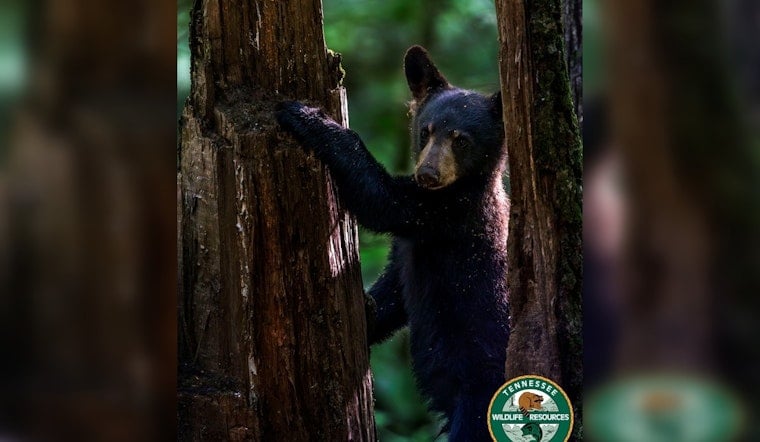
Black bears are officially making the rounds in Middle Tennessee this spring and early summer, and state wildlife officials want residents to be ready for unexpected visitors.
The Tennessee Wildlife Resources Agency (TWRA) says bears are on the move across the region and often pass quickly through an area while foraging for food. That quick stroll can turn into a long stay, however, when a bear discovers easy meals. Once a bear starts to associate people and houses with food, wildlife managers say it can quickly become a public-safety problem instead of a brief wildlife sighting.
Where bears are turning up
According to WSMV, TWRA has logged recent reports in Hickman, Dickson, Wilson, and Sumner counties. Tennessee’s black bear population is still centered on the Cumberland Plateau and in East Tennessee, but it is gradually spreading into neighboring regions, including parts of the Mid-State.
TWRA told the station that bears will sometimes move right through neighborhoods while searching for food. If they keep showing up in the same spot, that almost always means they have found an easy snack nearby and added the area to their regular route.
How many bears are here, and why relocation is not the fix
TWRA's recent materials put the state's black bear population in the mid thousands, roughly 5,000-6,000 animals statewide, and its FY24 annual report notes more than 6,000 bears in Tennessee. Those numbers reflect decades of recovery and expanding habitat that have pushed some bears out of traditional mountain strongholds and into parts of Middle Tennessee.
According to TWRA's annual report, nearly 70% of relocated bears die within four months. That high mortality rate is a major reason the agency focuses on preventing bears from becoming food-conditioned in the first place, instead of relying on trapping and moving them after the fact.
Simple steps to keep bears out of your yard
To avoid turning your yard into a bear hangout, TWRA urges residents to follow BearWise basics: never feed or approach bears, secure food, garbage and recycling, remove bird feeders when bears are active, never leave pet food outdoors, and clean and properly store grills and smokers, as reported by WSMV.
Those simple moves cut down on the chance that a curious young male or any other bear will keep returning for an easy meal. Officials also recommend letting neighbors know about sightings so everyone can remove attractants together and avoid creating problem bears that have to be dealt with later.
Where to report sightings
If you spot a bear, TWRA asks that you submit a report through its "I Saw A Bear" online form so biologists can track where bears are moving and identify potential problem animals quickly. The agency's reporting page and forms are available through the Tennessee Wildlife Resources Agency.
If a bear is in a populated area and acting aggressively, officials say to call 911 or your local police department immediately instead of trying to scare it off yourself.
What to expect this season
Wildlife officials say late spring and early summer are prime times for dispersing bears. Young males in particular can roam long distances while searching for new territory and potential mates.
Local outlets have already highlighted individual sightings and police reminders in places like Cookeville, and that pattern is something communities should expect in the years ahead, according to NewsChannel5.
The bottom line for Middle Tennessee: lock down the food sources, give bears plenty of space, and report sightings so wildlife managers can keep the animals wild and the neighborhoods safe.




