

























































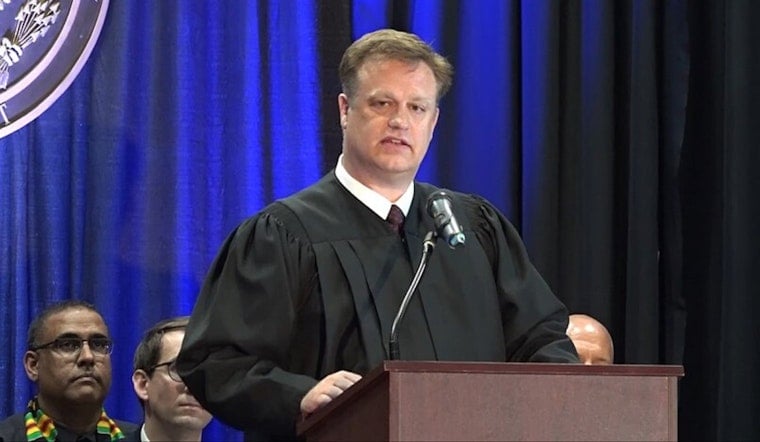
Federal appeals judge Ryan D. Nelson is facing misdemeanor battery and malicious injury charges after an April parking lot confrontation in Idaho Falls, where video appears to show him grabbing a man’s sunglasses, hurling them across the pavement, then stomping on them. Nelson has pleaded not guilty and is due back in Bonneville County for a pretrial conference on June 18, as the dust-up has sparked both a criminal case and a separate judicial misconduct complaint.
Charges, Plea And Court Date
Court records show the charges were filed in April, and Nelson entered a not guilty plea on May 13. A pretrial conference is set for June 18 at Bonneville County Magistrate Court in case number CR10-26-03905, with counts of misdemeanor battery and malicious injury to property. As reported by Bloomberg Law, the filings and schedule come directly from local court records.
What The Footage Shows
Surveillance video first published in local reporting and later summarized by legal outlets appears to show Nelson taking the other man’s eyeglasses, tossing them across the asphalt, then stepping on them, a sequence that has been replayed and dissected across the internet. Witness accounts and a police affidavit cited in coverage also describe a heated exchange that involved profanity and what appears to be a reach toward the other man’s phone. For the video and a detailed description of the encounter, see Reason.
Ethics Complaint Filed With The Circuit
Watchdog group Fix the Court has filed a complaint asking the Ninth Circuit to review Nelson’s conduct and to examine why the April incident was not publicly known until June, arguing the behavior clashes with the Code of Conduct for United States judges. The complaint cites Canon 1, which calls on judges to maintain high standards of conduct, and urges circuit officials to consider whether discipline is warranted. The filing is available through Fix the Court.
How Judicial Complaints Are Handled
Federal misconduct complaints move through a process set out in the Judicial Conduct and Disability Act. A circuit chief judge can identify a complaint and open a limited inquiry or, if key facts are disputed, appoint a special committee to investigate. The Code of Conduct and the judiciary’s procedural rules guide whether an allegation gets elevated to a formal review by the Ninth Circuit’s judicial council. Guidance from the U.S. Courts outlines those standards and basic complaint procedures.
What Comes Next
Nelson’s lawyer has said the judge will address the criminal charges through Idaho’s courts and that Nelson regrets the confrontation, while a Ninth Circuit spokesperson and local prosecutors did not immediately respond to reporters. With publicly available video and a formal misconduct complaint now in play, the case will unfold on two tracks: a local criminal prosecution and a separate internal ethics review. The chief judge’s next moves will determine whether the misconduct complaint advances to a full investigation, a process detailed in the filing from Fix the Court.





