

























































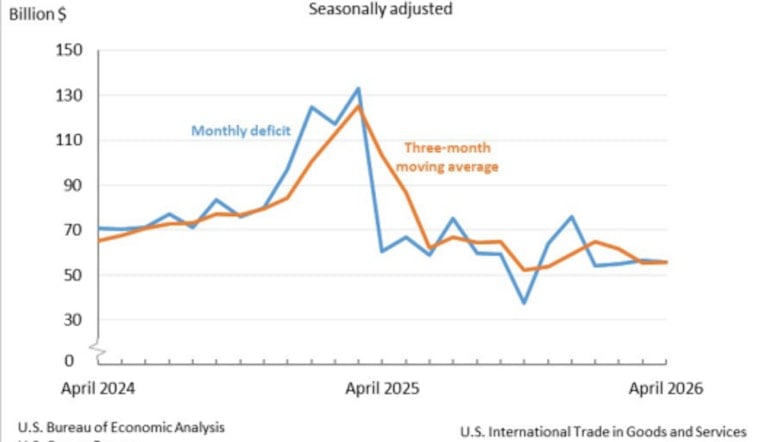
The U.S. goods trade deficit ballooned in May to $105.8 billion, the widest gap in more than a year, as imports climbed and exports slipped. The shortfall jumped about 27.4% from April and blew past economists' expectations, raising the odds that net trade will be a bigger drag on measured growth in the second quarter.
According to Bloomberg, Commerce Department figures showed a $105.8 billion goods deficit for May, a 27.4% rise from April that topped the median Bloomberg survey estimate of about $85 billion. Bloomberg reports that the month-over-month jump was driven by rising imports and falling exports, based on Commerce Department data.
What pushed the gap wider
The Commerce Department numbers show imports rose in May while exports fell, a combination that pushed the goods deficit up 27.4% from April. Trade data are reported in current dollars and are "not adjusted for inflation," the Census Bureau notes, so price swings, especially in fuel and industrial supplies, can amplify month-to-month moves in the headline gap. That volatility means a single month can look noisy, which is why economists lean on multi-month averages and more detailed commodity breakdowns before declaring a trend.
Why it matters for growth and policy
Because imports are subtracted in GDP accounting, a wider goods shortfall can trim reported output, and the Bureau of Economic Analysis feeds Census trade statistics directly into the national accounts. A bigger than expected deficit in May could therefore reduce the contribution from net exports to second-quarter GDP if the pattern sticks. Policymakers and markets track the trade figures closely because sharp swings can muddy the picture on both growth and inflation.
What to watch next
Economists will be combing through the Census advance figures and the full FT-900 tables to judge whether May was a one-off or the start of something more persistent. The Census has the full monthly trade release scheduled for July 7, 2026. If import prices ease or exports recover in the coming months, the headline gap could narrow; if not, trade will remain a key wild card in the second-quarter growth story.





