

























































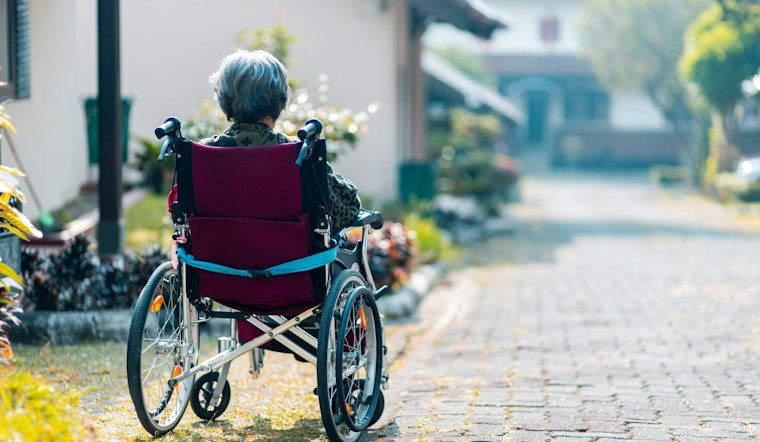
A federal judge has signed off on a sweeping settlement that will require the City of Chicago to identify, build or rehabilitate 2,800 affordable apartments that are fully accessible for people with disabilities. Approved Monday, the agreement resolves an eight-year lawsuit brought by disability-rights organization Access Living and will be entered as a judgment in federal court. Advocates are calling it one of the largest accessible-housing settlements in the nation’s history and say it could finally connect thousands of disabled Chicagoans with units they can actually use.
As reported by Crain's Chicago Business, U.S. District Judge Edmond E. Chang approved the deal Monday, clearing the way for the city to bring thousands of units into compliance with federal accessibility law. The filing locks in terms that developers, city agencies and advocates will now be responsible for carrying out, Crain's said.
The settlement had already made it through City Hall. The City Council advanced the agreement in May after the Finance Committee recommended it for approval. WTTW reported that Ald. Raymond Lopez was the lone dissenting vote, while the Chicago Sun-Times quoted Lopez saying the lawsuit felt at odds with prior partnerships.
The U.S. Department of Justice weighed in back in 2023, filing a Statement of Interest that argued Chicago’s affordable-housing programs are a "program or activity" under Title II of the ADA and Section 504 of the Rehabilitation Act. That means, the department said, the city cannot contract away its accessibility obligations. The DOJ said its position backed the core legal theory that drove the litigation and settlement talks.
What The Settlement Requires
Under the agreement, Chicago must identify, build or rehab 2,800 units that meet federal accessibility standards: 2,000 for people with mobility disabilities and 800 adapted for hearing and vision impairments. The settlement also includes $2.25 million in damages to Access Living, according to a press release from Access Living. The deal requires the city to reserve at least 250 of the new units for households at or below 30% of area median income and another 250 for households at or below 50% AMI, and it applies to properties with five or more units that have been funded or assisted by the city after June 2, 1988. Access Living says the agreement could affect more than 40,000 rental units across more than 900 developments.
“This is a historic resolution to a long-fought case that will benefit the people of Chicago for generations,” Daisy Feidt, Access Living’s executive vice president, said in a statement from Access Living. Kenneth Walden, the organization's lead civil-rights attorney, said the settlement "forces the City of Chicago to follow basic civil rights laws" and could push other jurisdictions to address similar accessibility gaps.
Legal And Budget Questions Ahead
The city will also be responsible for paying Access Living’s legal fees, but the two sides could not agree on the amount and left that question to Judge Chang, WTTW reported. Records show Chicago spent roughly $4.1 million on outside counsel to defend the case between 2018 and October 2024, a budget hit municipal leaders will now have to account for alongside the cost of retrofits and new programs.
What's Next For Tenants
The practical work of locating, inspecting and retrofitting or building units now shifts to the city's housing department and affiliated agencies, and advocates say quick progress will be crucial to turn the court order into move-in ready homes. Access Living and its counsel say the agreement will be enforceable through the federal court and requires annual reporting, which should give tenants a tool to hold the city to its timetable in the coming years.





