

























































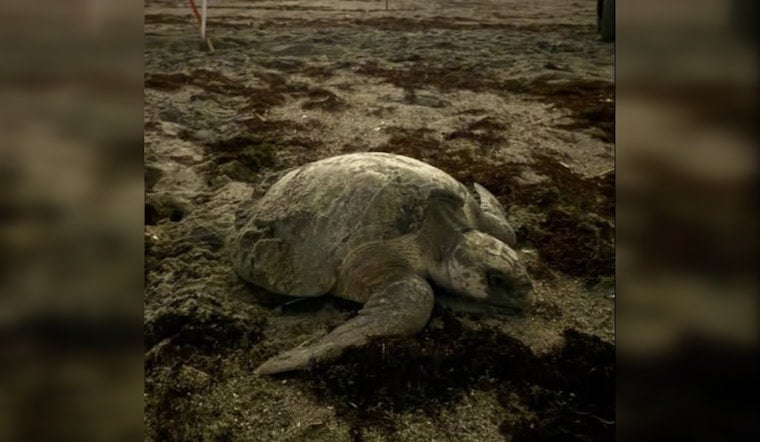
A sea turtle nicknamed Tini has turned a quiet stretch of Jupiter Beach Park into a high-stakes science watch. Researchers say the female olive ridley sea turtle was spotted hauling up the upper beach, digging a nest and carefully covering a clutch of eggs in what may be the first olive ridley nest ever documented in Florida.
Staff from local research groups observed the nesting, then marked off the site so beachgoers keep their distance. The area is now cordoned off while teams track sand and weather conditions around the eggs. Researchers expect to know more about how the nest fares, and whether any hatchlings emerge, later this season.
A Possible First On Florida Sand
If it is confirmed, Tini’s clutch would be the first olive ridley nest on record in Florida, a state where nesting is usually dominated by loggerhead, green and leatherback turtles. According to a Facebook post by Nassau County, FL, researchers from the Loggerhead Marinelife Center spotted the turtle at Jupiter Beach Park and contacted county staff. The unusual find was later summarized for statewide readers by Florida Trend.
What Scientists Know About Olive Ridleys
Olive ridley turtles have a near circumtropical range in the world’s oceans, but they are not regular nesters in the western Atlantic. Most known Atlantic nesting takes place in Suriname, French Guiana and Brazil, according to a review on PubMed Central.
The Loggerhead Marinelife Center’s species guide notes that olive ridleys are not known to routinely nest on beaches in the United States. That makes a verified nest in Florida especially noteworthy for biologists and coastal managers who track long term nesting trends. Data from this clutch can help answer basic questions in an unusual location, such as how many eggs were laid, how incubation temperatures play out in local sand and how hatchlings behave if they make it to the water.
Why This Might Be Happening
Scientists and local officials caution that a single nesting turtle does not prove a lasting shift in behavior or range. Even so, they point to changing ocean conditions, warming waters and variable currents as possible drivers behind rare or out of place nesting events.
Nassau County’s post relayed that researchers are considering whether shifting migration patterns could be part of the story for Tini. Broader work from NOAA and other research groups has found that large scale oceanographic changes can influence where sea turtles travel and when they choose to nest in some parts of the world.
How Beachgoers Can Help
While scientists watch the nest, officials say beach visitors can quietly tip the odds in the turtles’ favor. They urge people to:
- Turn off or shield beachfront lights at night so nesting females and hatchlings are not disoriented
- Fill in holes and knock down sandcastles before leaving the beach so turtles do not get trapped
- Pack out trash and remove fishing line that could entangle wildlife
- Stay well back from nesting turtles and never touch or shine lights on them
- Avoid leaving furniture, tents or other gear on the sand overnight
The Florida Fish and Wildlife Conservation Commission publishes lighting and beachfront best practices for protecting sea turtles, and county websites list additional local rules and practical steps for keeping eggs and hatchlings safe.
Monitoring And Who To Contact
Research teams will continue to monitor Tini’s nest at Jupiter Beach Park and plan to share updates if hatchlings emerge or new information comes in about the clutch. Until then, officials are asking the public to treat the marked-off area as strictly off limits.
If you encounter a nesting turtle, a stranded or injured turtle or hatchlings that appear disoriented, contact the Loggerhead Marinelife Center or call the Florida Fish and Wildlife Conservation Commission’s Wildlife Alert Hotline at 1-888-404-FWCC (1-888-404-3922) so trained responders can step in.





