

























































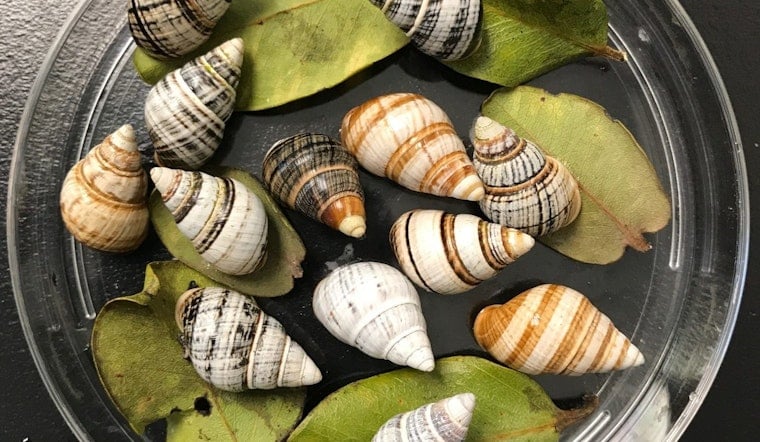
On a misty stretch of the Koʻolau Mountains, more than 100 critically endangered kāhuli, the tiny jewel‑like Hawaiian tree snails, just got a carefully planned shot at survival. This week, conservation crews released them into a specially protected pocket of forest built to shut out the predators that nearly wiped them out.
According to Hawaii News Now, the Honolulu Zoo teamed up with the Hawaii Department of Land and Natural Resources and the state’s Snail Extinction Prevention Program for the release. The snails were raised in captivity, then moved into a managed site designed to keep out rats, rosy wolf snails and other invaders that have turned native snails into an endangered‑species cautionary tale.
Predator‑proof homes for released snails
The Snail Extinction Prevention Program (SEPP) relies on predator‑proof exclosures, small cage structures and intensive trapping to give kāhuli a fighting chance. Those barriers typically use smooth wall surfaces, angled flanges, copper mesh and electric deterrents to keep out rats, Jackson’s chameleons and carnivorous snails, according to DLNR's SEPP.
Where the program stands
Conservation partners have been ramping up captive breeding. SEPP and allied labs held about 14,000 snails in captivity at the end of 2025 and released more than 2,500 individuals into protected exclosures on Oʻahu last year. The Honolulu Zoo’s Hale Kāhuli captive‑rearing lab, which opened in December 2025, now joins Bishop Museum and DLNR as public and institutional partners working to repopulate native forests, per the science newsletter Tentacle.
Why kāhuli matter
Kāhuli once included roughly 750 distinct species across the islands and play an outsized role in nutrient cycling and overall forest health, DLNR notes. With about 60% of those species already lost and many more at risk, biologists see releases into predator‑free sites as a stopgap while longer‑term habitat work and predator control continue, according to DLNR.
Staff will keep tabs on the new Koʻolau population on a regular schedule and adjust control measures as needed, which is standard practice for SEPP’s reintroduction work. The U.S. Fish & Wildlife Service has described these efforts as a “work of generations,” emphasizing that restoring kāhuli will require long‑term partnerships and patience, according to the U.S. Fish & Wildlife Service.




