

























































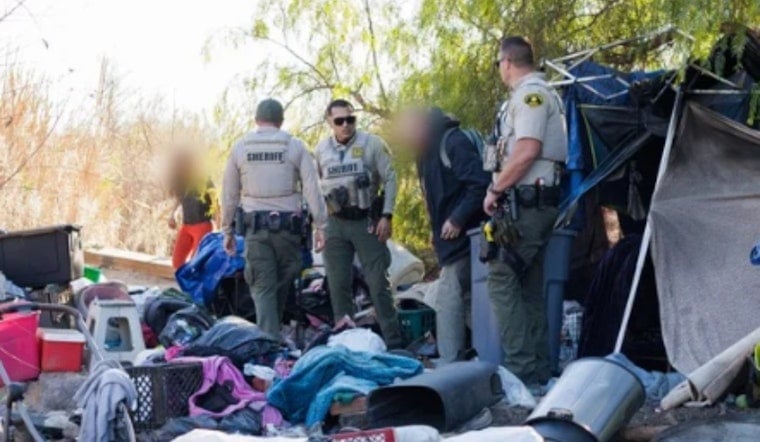
Piles of trash, scattered propane tanks and even a wood-burning stove are now tucked into the brush along the San Diego River in Lakeside, and people who work that stretch of river say it feels like a disaster waiting to happen.
Conservancy crews and volunteers report that homeless encampments in the riverbed have grown fast and spread wide, creating a public-safety worry that is as visible as it is volatile. They warn that the mix of flammable gear and bone-dry vegetation could fuel a fast-moving fire in an area where firefighters do not have easy access or hydrants to fall back on.
Staff and neighbors told reporters that the scale of the camps has caught even long-time river workers off guard and has sparked urgent talk about bringing in heavier equipment, changing how cleanups are done and ramping up outreach to people living along the waterway.
According to KGTV, the Lakeside River Park Conservancy has identified eight homeless encampment sites along the San Diego River and says teams pulled roughly 2.5 tons of trash out of the riverbed during a May cleanup. Field superintendent Robert Doty told reporters that in his 15 years working the river, he has never seen camps as large or as entrenched as the ones now clustered in the area. Conservancy leaders say that effort barely scratched the surface, and that hand-pulling trash is no longer safe or realistic for crews.
“The more the trash accumulates and the more the waste accumulates, the more hazardous the encampments become over time,” Lakeside River Park Conservancy CEO Julie Turko said, pointing to propane tanks, gas cans, barbecue setups and a wood-burning stove tucked into dry brush as a combustible combination. Turko and Doty cautioned that if a fire does break out deep in the riverbed, crews will struggle to get water to it quickly because many stretches do not have hydrants or simple access points. The conservancy says future cleanups may require mechanized equipment to protect workers and move debris out faster. Per KGTV.
Per the San Diego County Sheriff's Office, the Homeless Assistance Resource Team (HART) does regular outreach in river areas with a mix of deputies, clinicians and partner providers. The team helps organize encampment cleanup operations, connects people with shelter and housing resources and offers transportation and referrals. Deputies say outreach comes first, but they also respond to public-safety complaints and work with county services when encampment sweeps are planned. The model relies on follow-up so people are more likely to stay connected to services instead of being pushed from one riverbank to another.
Volunteer Cleanup In May
Volunteers with I Love A Clean San Diego teamed up with Lakeside River Park Conservancy staff during San Diego River Days in mid-May to tackle litter and debris around the Lakeside Cactus Park trailhead. The event, listed on I Love A Clean San Diego's calendar, was one of several River Days activities designed to highlight river health and trash reduction. Conservancy leaders say volunteer days help knock down the most immediate hazards and, just as importantly, show funders and public agencies how big the problem has become, per I Love A Clean San Diego.
Countywide Trend And Context
The clusters of tents and debris in Lakeside are part of a larger pattern along the San Diego River corridor, as outreach teams and cleanup crews move from Mission Valley out toward East County. Reporting earlier this spring documented similar concentrations of people and trash, as well as the tough choices officials face when they try to weigh fire danger and environmental damage against the realities of clearing camps where people have nowhere stable to go. Advocates and service providers argue that unless there is more shelter space and consistent outreach, each sweep just shifts people to another patch of the riverbank, according to the San Diego Reader.
The Lakeside River Park Conservancy says it plans to hold community meetings to talk through long-term cleanup strategies, public access and outreach, and officials say they are weighing options that try to protect the environment while still treating people in the encampments humanely. Residents who see immediate safety issues or want to request outreach can find HART contact information on the Sheriff's outreach page, as per the San Diego County Sheriff's Office.




