

























































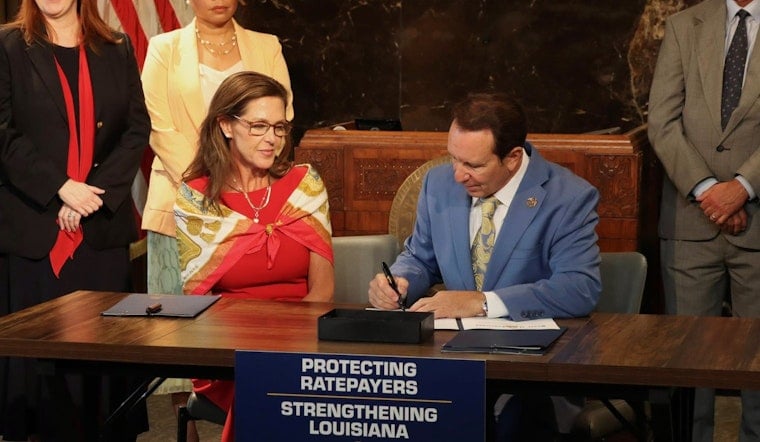
Gov. Jeff Landry on Thursday signed an executive order that he says will shield Louisiana ratepayers and communities even as the state chases multibillion-dollar data center projects. The move lands right in the middle of a growing backlash over Entergy Louisiana’s plan to buy an aging Texas gas plant to help power Meta’s north Louisiana data center, a deal critics say could add roughly $8 a month to household electric bills.
What Landry’s Order Actually Does
The executive order, titled the Louisiana Ratepayer and Community Protection Initiative, tells the Louisiana Economic Development (LED) office to build a “Ratepayer and Community Protection Framework” that LED must use when deciding incentives for data centers and other large-load projects. The order instructs LED to require that large-load customers “fully fund the incremental generation, transmission, and infrastructure investments necessary to serve their projects,” and to factor in community, workforce and environmental commitments when granting tax exemptions, according to the text of the order.
As described by the Governor's Office, the framework is meant to steer LED’s post-certification agreements and conditions for Data Center Sales and Use Tax Exemptions.
The Cottonwood Deal And Ratepayer Alarm
Landry’s order lands as regulators and consumer advocates are already sparring over Entergy Louisiana’s proposal to buy the Cottonwood generating facility in Texas and whether everyday customers will ultimately cover the cost. A June review by consultant Lane Sisung, filed at the Public Service Commission (PSC) and summarized by the Louisiana Illuminator, pegs the tentative price at about $1.8 billion, with roughly $1.4 billion to acquire the plant and another $300 million in upgrades.
Sisung estimates that could translate into roughly $8 to $13 more each month for the average Entergy household. His report also flags that Cottonwood is more than twenty years old, has already required expensive reliability work, and may be priced with a “scarcity premium.” The consultant’s filing is available in the commission’s docket.
Meta, Entergy And The PSC
Meta and Entergy have pushed back hard on the idea that regular customers will be stuck with the tab for Cottonwood. A Meta spokesperson told NOLA that the company “pays its own way for power and new infrastructure” and that its agreements with Entergy ensure those costs will not be shifted to Louisianans.
Entergy, in a statement cited by local coverage, has argued that the Cottonwood facility is needed to support broader customer growth across Louisiana and to replace retiring units. Still, skepticism at the PSC has been open and blunt. Commissioner Eric Skrmetta has said he will not vote to approve the purchase unless it is clear Meta is paying for it, while Commissioner Davante Lewis has objected to nondisclosure agreements tied to the project that he says cut against calls for transparency.
National Pressure And State Politics
The fight over who pays for the grid upgrades that hyperscale data centers require is not just a Louisiana drama. The Federal Energy Regulatory Commission recently ordered regional grid operators to justify and reform tariff rules for large loads, and the White House has rolled out a Ratepayer Protection Pledge aimed at keeping consumer bills in check as data centers spread, according to FERC and the White House.
Landry has consistently talked up data center investment as a source of jobs and revenue, even as critics warn about rising power demand. His decision to roll out a protections framework at the same time is an effort to balance economic development with consumer safeguards, a posture previously reported by E&E News.
Legal And Regulatory Stakes
For all the political heat around Cottonwood, the final call on Entergy’s proposed purchase rests with the five-member Louisiana Public Service Commission. The PSC’s review, including consultant reports and utility filings, will determine whether Entergy can pass costs on to customers.
Landry has said that the PSC should decide the issue and that he has no vote on utility approvals. Critics, though, argue that public trust depends on open filings and a clear showing that customers will not shoulder the costs, according to reporting by NOLA and the executive order document from the Governor's Office on LED’s role.
What Happens Next
LED is now set to start drafting the framework Landry ordered, while Entergy is expected to answer the consultant’s analysis in additional PSC filings. Local coverage reports that the commission could take up related issues later this summer.
The PSC was scheduled to meet on Aug. 12 to consider next steps, and the utility is expected to file replies in the commission’s docket in the coming weeks, according to the Louisiana Illuminator.
For now, Landry is trying to walk a narrow line. He is offering new guardrails for big tech projects while insisting that data centers are central to Louisiana’s economic future. How the PSC, Entergy and Meta translate those assurances into contracts and, ultimately, power bills will determine whether Louisianans end up paying for the state’s AI era growth.




