

























































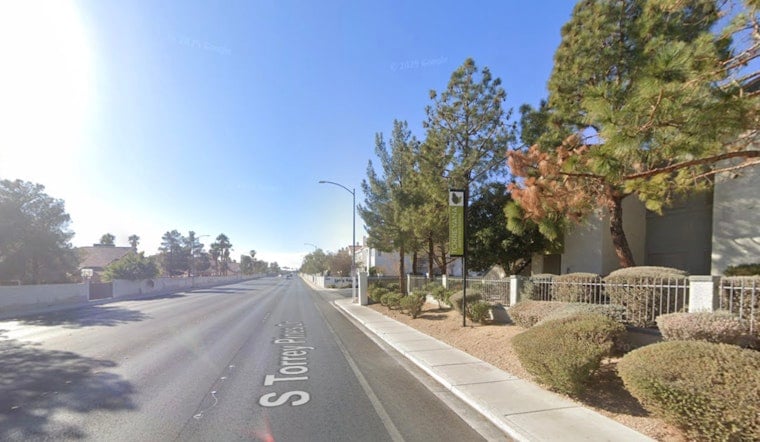
Seven months after a late November rampage tore through a southwest Las Vegas neighborhood, 78-year-old widow Ana Aleman is still staring at a sheet of plywood where her garage door used to be and a car she cannot reach. She says the busted opening has left her home vulnerable to animals and the elements, and the roughly $3,000 replacement estimate is simply out of reach on her Social Security income. For Aleman, that boarded-up gap is a daily reminder that a court case on the books has not yet translated into a repaired door.
According to FOX5, the chaos started in late November when a driver allegedly targeted his ex-girlfriend’s house, then rolled down the 5200 block of South Torrey Pines Drive and nearby streets, ramming more than a dozen garage doors. Court documents cited by the station say the defendant, Chad Walker, was arrested and later sentenced, facing up to five years in prison, and filings list more than $45,000 owed to victims, including roughly $3,500 in restitution to Aleman. Even with a sentence and restitution order in place, she says there has been no movement on actually getting her garage fixed.
Why restitution can take months
Court-ordered restitution is rarely a quick payout. Victims typically have to submit estimates and receipts, judges may hold separate restitution hearings, and any money depends on how much can be collected under probation conditions and what assets the defendant has. Nevada’s Victims’ Bill of Rights promises “full and timely” restitution, but legal materials acknowledge that the gap between an order on paper and money in hand can be lengthy while the system processes forms and payments, according to the Nevada Attorney General’s Office. Advocates say victims are usually best served by keeping detailed repair documentation and staying in regular contact with the prosecutor’s victim-witness unit and the probation office so any restitution can be tracked.
Neighbors say repairs lag
Neighbors who watched the rampage unfold on home surveillance footage recall the sickening crunch of doors caving in and the long, slow slog of repairs afterward. “It’s sad that our neighbor, she can’t live in peace anymore,” Michelle Ellebracht told FOX5, which aired video from the spree along with interviews on the block. One homeowner said he spent about $3,500 to replace three garage doors, while others reported bills ranging from a few hundred dollars to several thousand. Many residents say they want to see restitution reach the people paying those bills before the defendant walks free.
What victims can do
Attorneys and victim advocates advise homeowners in similar situations to save every estimate, photograph and receipt, and to file a formal restitution request with the prosecutor so losses are clearly on the record. The Nevada Victims of Crime Program can offer limited help for certain expenses, and local district attorney victim-witness units can provide updates on case status and restitution timelines. Legal guides also suggest checking in with probation officers who may be responsible for tracking and forwarding any payments.
If the court-ordered money never shows up, victims can consider a separate civil claim to try to recover costs, although lawsuits can be slow and expensive. Clear documentation of damage and expenses is key, according to Shouse Law and state resources.
For Aleman and her neighbors, the wish list is not complicated: a working garage door, a few thousand dollars to cover the damage and a sense of normalcy. For the courts, prosecutors and probation staff, the case is another reminder that a conviction is only one part of making victims whole. Until the money and repairs arrive, Aleman says she will keep waiting and watching the plywood where her garage door used to be.





