

























































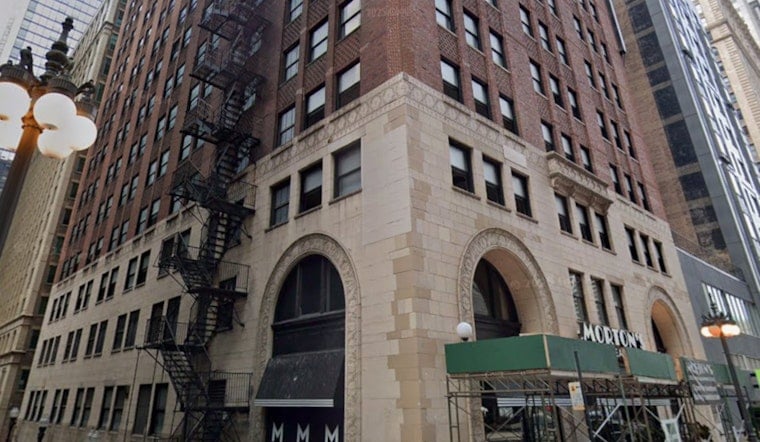
The Loop is trading in cubicles for coffee tables as another historic office tower makes the jump to residential life. At 65 E. Wacker Place, a major office-to-apartment conversion is set to welcome tenants this summer, one of dozens of projects quietly rewriting how downtown Chicago operates after dark. For neighbors, that means more lights on at night, a different mix of ground-floor shops and a central business district that starts to feel a little more like a neighborhood.
The historic Millinery Mart building, now branded Wacker Place, is being converted into 252 apartments, with 51 of those units reserved under the city’s Affordable Requirements Ordinance. According to the Chicago Sun-Times, Mavrek Development and Cross Street are steering the project and have already started pre-leasing. REBusinessOnline reports that the roughly $106 million redevelopment is backed by a $62.4 million senior loan, an $11 million loan and about $17 million in historic tax credits, with initial move-ins expected in August and full delivery targeted for November under a phased construction schedule.
At City Hall, planners say this is no one-off. The Department of Planning and Development counts 25 office-to-residential projects underway in downtown Chicago, more than in the previous 20 years combined. Those efforts are projected to create roughly 3,900 housing units while repurposing about 4 million square feet of empty office space, according to recent public updates from the Chicago Department of Planning and Development. In other words, a lot of old office space is about to find new life as someone’s living room.
City Money, Landmark Moves And Differing Timetables
Some of the biggest conversion plays are tied to the city’s LaSalle Street revitalization push, and those projects have leaned on public help. The City Council signed off on up to $57 million in tax increment financing for the overhaul of 30 N. LaSalle, a plan that would flip about 371,000 square feet of office space into 349 apartments as part of a six-building LaSalle package, Chicago Construction News reported.
At Wacker Place, the development team went another route. They pursued private financing and did not seek city subsidy, a choice they say helped them move faster through the process, according to the Chicago Sun-Times. The contrast is striking: one set of landmark towers waits on public funding approvals and complex agreements, while another races ahead on a purely private timeline.
Why Conversions Are Costly And Why They Still Make Sense
Turning yesterday’s office tower into today’s apartment building is not a cheap makeover. Deep office floor plates rarely play nicely with residential layouts, so developers are threading in new plumbing risers, reworking mechanical systems and sometimes even reconfiguring elevator cores just to make sure future tenants get daylight and decent floor plans. All of that construction work piles onto already steep costs.
Yet developers and city officials argue that the math can still work. Strong rental demand, the availability of historic tax credits and carefully staged financing packages are helping certain vintage high-rises pencil out as housing rather than sit half empty as offices. As WBEZ reported, leadership at the Department of Planning and Development says they are “encouraged” by teams that see these properties as assets to remake, even as experts warn that financing gaps and construction costs remain stubborn hurdles.
What To Watch Next
In the near term, keep an eye on whether Wacker Place hits that August move-in target and how quickly the 51 income-restricted apartments lease up under the city’s affordability rules. Longer term, the real test will be what happens with follow-up zoning, landmark and TIF decisions tied to the LaSalle Street projects and other major Loop conversions.
The city’s broader planning pipeline is starting to move again. A May meeting of the City Council’s zoning committee cleared nearly 2,000 apartments across several developments, a signal that more housing is on deck for downtown and nearby neighborhoods, according to The Real Deal. If those approvals keep coming and residents actually fill these former office towers, the Loop’s conversion wave could turn the traditional nine-to-five district into something far more round-the-clock.





