

























































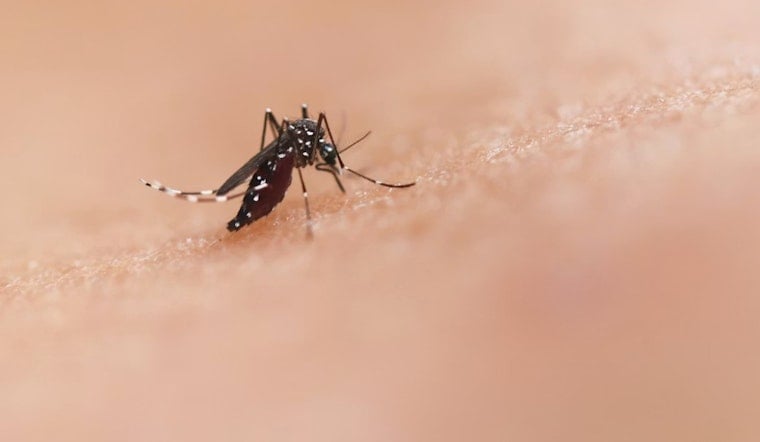
Loveland is shifting into mosquito-fighting mode this week, rolling out targeted spraying in select neighborhoods as officials try to keep West Nile virus at bay. Instead of fogging the entire city, crews will focus on small, higher-risk pockets identified through trap surveillance. Residents can expect to see spray trucks in the evening and get more precise, block-level alerts about which streets are on the schedule.
Local broadcaster CBS News Colorado reports the city confirmed the plan in a short advisory and said crews will concentrate on neighborhoods where surveillance has shown elevated mosquito activity. According to CBS News Colorado, the effort is part of Loveland’s seasonal mosquito-management work.
How officials decide where and when to spray
The City of Loveland contracts with Vector Disease Control International to run seasonal surveillance and testing across roughly 40 trap sites, then deploy treatments when certain thresholds are met. Fog-spraying is triggered only after trap counts or infection data cross set levels, with the city citing a benchmark of about 100 total mosquitoes or 50 Culex mosquitoes in a single trap. Adult mosquito treatments are paired with larvicide work and public outreach, and the city posts maps and program details for residents to review, according to the City of Loveland.
County criteria and risk measures
Larimer County uses a “vector index” to estimate how many mosquitoes in a given area are infected and shares weekly surveillance updates to guide local responses. The county and its municipal partners ramp up control measures when the vector index and positive mosquito pools point to elevated public-health risk, while neighboring cities sometimes rely on slightly different numeric triggers when deciding whether to spray for adult mosquitoes. As outlined by the City of Fort Collins, those metrics, along with Colorado State University testing results, help determine where spray trucks roll.
What residents should do and how they'll be notified
Officials say notifications and spray maps are pushed directly to affected neighborhoods, and municipal channels will list the exact treatment boundaries. Residents are urged to watch city alerts and local social pages for block-level updates as crews move around town.
The Colorado Department of Public Health and Environment recommends using EPA-registered repellents, wearing long sleeves at dawn and dusk, draining standing water, and repairing window and door screens to cut down on mosquito bites. Those basic steps remain the strongest defense because there is no vaccine for West Nile. For prevention guidance, see the state health page at CDPHE.
Local history and why officials act early
Loveland has detected West Nile-positive mosquito pools in previous seasons. In one example, a 2024 trap near Denver Avenue and 9th Street tested positive. Officials say ongoing surveillance is intended to flag similar hot spots early so they can reduce the risk to people.
Targeted spraying is meant to knock down adult mosquito numbers in those hot zones while limiting pesticide use across the rest of the city, a strategy the municipality has used in prior years, according to the City of Loveland.





