

























































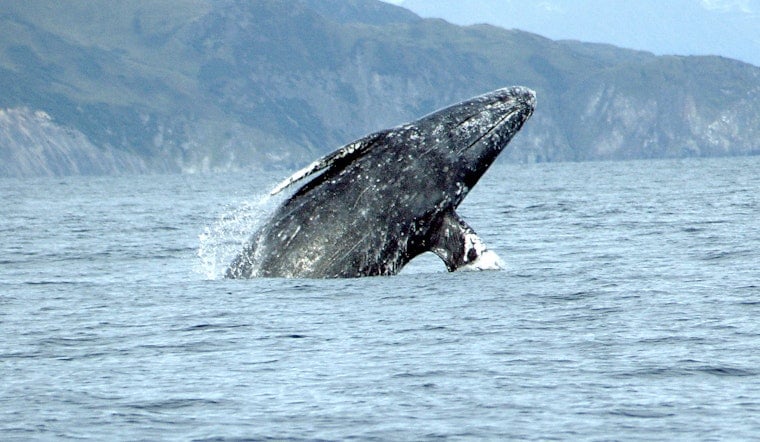
A bloated gray whale roughly 41 feet long washed ashore near Gearhart last week, stopping beachwalkers in their tracks and drawing a quick response from coastal crews. Staff from the Seaside Aquarium said the male whale had likely been dead for months and was so decomposed that a necropsy was off the table. The grim discovery is the latest in a run of early-season strandings along the Pacific Northwest that scientists say they are watching very closely.
As reported by KATU, Seaside Aquarium general manager Keith Chandler said the 41-foot male had been dead for months and will not be necropsied because of how far decomposition has progressed. Chandler told KATU the aquarium has logged 19 strandings or carcasses on the Oregon coast so far this year and noted that strong west winds have been blowing more marine remains onto local beaches.
The Cascadia Research Collective is keeping a public, running tally of this season’s strandings, and that list shows dozens of whale deaths on Washington beaches this spring - at least 30 cases by late May - with responders posting preliminary field notes as they come in. As outlined by Cascadia Research Collective, the database also helps coordinate which teams conduct necropsies and where samples are routed for study.
Preliminary examinations have repeatedly pointed to poor body condition as a common thread in many of the whales found, with animals frequently described as emaciated or undernourished. As reported by OPB, NOAA spokesman Michael Milstein told reporters, "Most of them are pretty undernourished, skinny," a sign researchers link to warming oceans and shifts in the food web.
How to report a stranding
Federal and state responders are asking anyone who encounters a stranded whale to stay well back and instead call the West Coast Marine Mammal Stranding Network at 1-866-767-6114. According to NOAA Fisheries, the hotline connects callers with trained local teams who can evaluate live animals, secure carcasses for research, and coordinate necropsies when conditions allow.
What scientists are watching
Researchers are following this early-season spike in deaths to see whether it signals a new mortality event for gray whales, similar to the unusual pattern that emerged after 2019. Scientists cited in regional coverage point to reduced Arctic-derived prey and earlier sea-ice melt as potential drivers that thin the amphipod and plankton resources gray whales depend on to pack on fat before migration, per OPB.
How responders handle carcasses
When a whale carcass is fresh enough, stranding teams conduct necropsies and collect blubber and tissue samples that can help pinpoint a cause of death. When the animal is too decomposed, crews typically secure the site and follow established disposal practices to limit hazards while preserving whatever samples are still usable. Oregon State University’s Marine Mammal Institute outlines protocols for reporting strandings, leaving animals undisturbed, and options for removal or burial when public safety or research needs call for action.
Local officials and aquarium staff continue to urge beach visitors to give any stranded whale plenty of space, keep pets away, and report sightings to the hotline so trained teams can respond. Where samples can be salvaged, they will feed into wider regional research on gray whale health and the larger environmental pressures working on this still-recovering species.





