

























































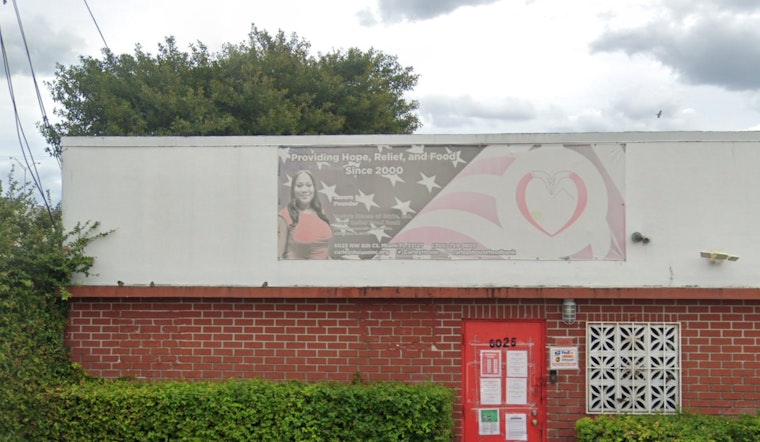
In Allapattah, the line outside Curley’s House Hope Relief Food Bank now runs so far down the sidewalk that regulars say you can spot it from the next corner. Neighbors queue up for the weekly grocery distributions while founder Lavern Spicer, who has led the volunteer-run pantry for roughly 30 years, describes the crush of demand with one word: “overwhelming.”
Local pantries pushed beyond capacity
Spicer said Curley’s House has seen about a 60% jump in people seeking help this year, and on some distribution days as many as 500 people have come through its doors, she told reporters, as reported by the Miami Herald. The pantry holds two distributions each week and operates with a staff of four and about 20 volunteers. Spicer said the roughly $300,000 currently available could run out by September if demand keeps climbing.
A mile apart, the same strain
Less than a mile away, The Village (FREE)DGE pantry, launched during the pandemic, is feeling the same squeeze. Founder Sherina Jones said traffic has picked up enough that her team now relies on a mix of grab-and-go events and stocked community fridges to keep up, according to WLRN. The Village typically hands out one bag per person, but staff and volunteers report that some families are arriving with children so each person can receive an additional bag.
Why demand is rising
The pressure on these Miami pantries echoes what is happening nationwide. The Federal Reserve Bank of New York recently flagged a “remarkable increase” in food insecurity, especially among lower-income households and families with young kids, based on new survey data. That rising hardship helps explain why so many consumers feel squeezed even when some economic indicators look stronger. The New York Fed found that the spike is concentrated at the bottom of the income ladder.
Closer to home, a poll commissioned by No Kid Hungry found that about 72% of Floridians say rising food prices have damaged their household finances, and roughly 60% report choosing between buying groceries and paying for other essentials. Those numbers track with the wave of first-time visitors and repeat visits that small pantries are reporting, according to No Kid Hungry Florida.
Policy and pressure
Local advocates say recent benefit disruptions and rule changes have tightened already thin budgets. Reporting on Florida’s new SNAP requirements found that the restrictions are changing how low-income residents shop for food and are adding more strain to pantry shelves. WLRN documented how those shifts are playing out in grocery aisles across the state.
At the state level, Feeding Florida points out that the 2026-27 budget includes a new funding package intended to connect farmers with families and expand access to fresh produce. Organizers caution, however, that the money will take time to move and will not refill pantry inventories overnight. Feeding Florida has highlighted a $38 million allocation aimed at strengthening farm-to-food-bank programs.
What pantries need now
Pantry directors say their immediate wish list is straightforward: steady cash, more volunteers and donations of both fresh and shelf-stable food. Curley’s House, which maintains that no one will be turned away empty-handed, is trying to stretch its remaining funds through the fall while volunteers work long hours to sort, bag and distribute what comes in, the Miami Herald reported.
Regional networks are working to backstop that effort. Feeding South Florida and its partner agencies are coordinating larger distributions and extra logistics support, while pressing for longer-term fixes such as expanded benefits and more predictable funding streams for neighborhood pantries. Feeding South Florida has argued that those systemic changes are key to easing the load on local food lines over time.
For now, organizers in Allapattah and nearby neighborhoods are improvising. They are teaming up on health clinics, sharing refrigerated donations and leaning hard on volunteer power, even as they warn that high prices and benefit gaps mean demand is likely to stay elevated through the summer. The long line outside Curley’s House has become a clear neighborhood snapshot of how tight household budgets are still pushing families to rely on food pantries for the basics.





