

























































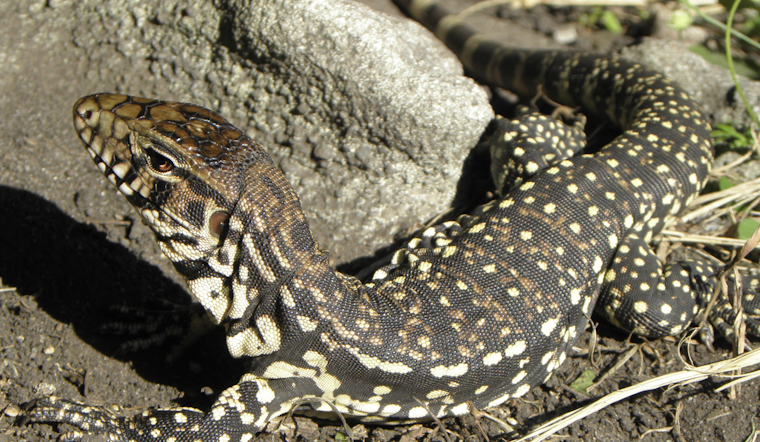
Life on the water near Lake Poinsett in Cocoa usually means the occasional alligator sighting. Lately, though, it is a different kind of reptile turning heads and rattling nerves: large Argentine black-and-white tegus slipping through backyards, hustling across streets and vanishing into nearby canals.
Homeowners say there has been a run of recent encounters, including one caught on video this week of a hefty lizard hustling from a road toward a canal. Neighbors say some of the animals look close to three feet long, and even longtime residents who are used to sharing space with gators say the tegus feel different: smaller, quicker and more inclined to root through nests and brush.
As reported by ClickOrlando, resident Brady Deluca recorded video of one of the lizards and described what he saw on News 6. "They're huge. They're so big. They look like mini dinosaurs," he said. A neighbor showed the station a crab trap where a smaller tegu turned up last year before slipping away, and residents estimated a more recent animal at roughly three feet long based on the size of that same trap.
FWC: Tegus can threaten nests and swim well
According to the Florida Fish and Wildlife Conservation Commission, Argentine black-and-white tegus can reach nearly five feet in length, are strong swimmers and have been documented eating the eggs of native species, including alligators and sea turtles. The agency urges the public not to try to catch or handle these lizards. Instead, officials ask anyone who spots a tegu to take a photograph if it is safe to do so, note the exact location, and report the sighting through the IveGot1 app or the Exotic Species Hotline.
Why this is especially worrying now
Timing is adding to the anxiety. Female tegus can lay roughly 35 eggs per year, and hatchlings typically show up in June and July, which increases the risk that new young lizards could establish themselves in neighborhoods this summer, as noted by Popular Science. State officials in neighboring Georgia have already been documenting and removing tegus, according to GPB, and university and agency early-detection efforts in Florida continue to track and remove invasive reptiles.
How neighbors can help
Wildlife officials say residents are a crucial early warning system. If you see a tegu, keep children and pets at a safe distance, try to take a clear photo, and report the sighting using the IveGot1 app or by calling 1-888-Ive-Got1, per the Florida Fish and Wildlife Conservation Commission. Homeowners can also help by cutting down on attractants, such as unsecured pet food, and by sealing potential hiding spots around yards and structures. For anyone who can no longer care for a pet tegu, the FWC’s Exotic Pet Amnesty program allows owners to surrender animals without penalty.





