

























































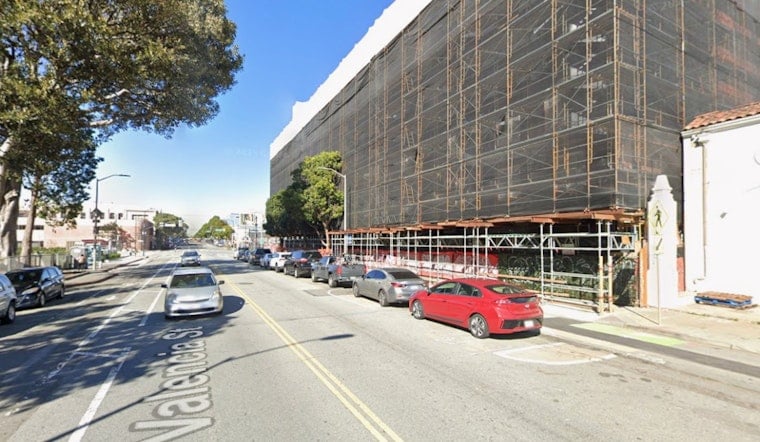
A two-phase plan to bring hundreds of affordable senior apartments to a Mission District block is stuck in neutral. Mercy Housing and its partners opened the first building earlier this year, but the second building, which the developer says is fully permit-ready, cannot start construction because it lacks the city backing needed to secure the low-cost financing that most affordable projects rely on. That leaves planned homes for older San Franciscans on hold while advocates and developers wait for new funding to materialize.
Sequoia Living bought the former Sears parking lot at Valencia and Cesar Chavez for $13.5 million, split the parcel, and sold half to Mercy Housing and the San Francisco Housing Accelerator Fund for phase one. The 146-unit senior building at 1633 Valencia opened this spring, according to the San Francisco Chronicle. Sequoia says the second parcel is effectively locked out. Because the nonprofit used private money to acquire the site, it has not been admitted into the city’s housing pipeline and therefore cannot pursue the tax credits and tax-exempt bonds that typically fund the bulk of a roughly $120 million project. “We are not even in the queue,” the developer told the paper.
Funding Rules And The Pipeline
City planning and housing documents indicate that the bottleneck is money, not zoning or permits. San Francisco Planning’s December 2025 report found more than 12,600 affordable units across roughly 59 projects in the pipeline that still need financing and warned that construction costs are pushing per-unit development to nearly $1 million, according to San Francisco Planning. Historical municipal bond planning and Mayor’s Office of Housing and Community Development materials assume municipal gap funding in the low hundreds of thousands of dollars per unit, roughly $250,000 to $330,000, but that still leaves large shortfalls for many shovel-ready projects. Trade reporting and developers put the city’s backlog of unmet gap needs well into the hundreds of millions of dollars, if not more.
Developers Say Sites Are Ready But Money Is Not
Industry observers say projects that have cleared design and permitting are now simply waiting for gap financing to show up. Developers told Bisnow that a backlog of gap funding has paused multiple affordable senior proposals, including a 199-unit plan on the Great Highway, and left teams holding entitled sites until capital appears.
What Could Break The Logjam
Two potential sources of new capital are on the table: a statewide bond and local trust-fund changes. Lawmakers have advanced proposals to place a roughly $10 billion affordable-housing bond on the statewide ballot this year, a measure supporters say would steer major new dollars to projects across California. Local leaders are also pushing to expand the city’s Housing Trust Fund dramatically. Proposals circulating this spring would more than double annual trust-fund contributions to roughly $125 million, Mission Local reported, and planners say new, predictable local revenue would be vital to unlock the pipeline.
What It Means For Seniors And The Neighborhood
For older San Franciscans on waiting lists and for nonprofit developers, the hold translates into delayed moves into stable, supportive homes and tighter budgets for operators that still need to ramp up services. Project teams argue that when state or local funds become available, and if administrative rules around solicitations and pipeline eligibility are adjusted, many of these shovel-ready projects could move quickly. Without those changes, some entitled sites may sit for years or be repurposed toward market-rate development.
City planners and nonprofit developers are watching the coming months closely. A successful state bond or a charter change to boost local housing money would materially change the calculus, while failure would leave the city’s affordable senior pipeline largely paused.





