

























































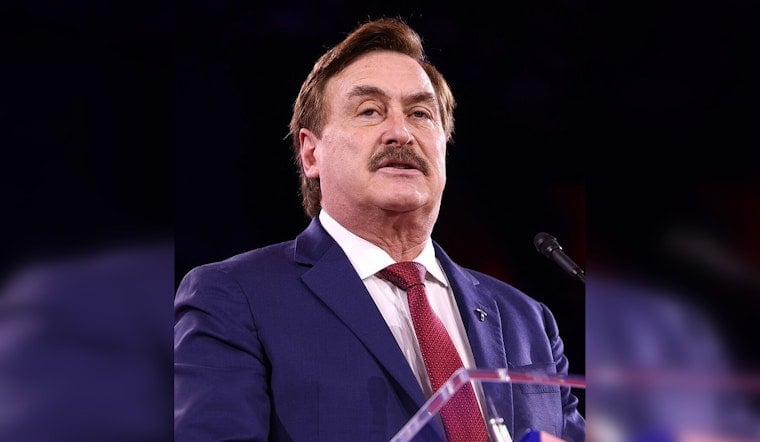
On the campaign trail in Minnesota, Mike Lindell is not just asking for votes, he is throwing pillows. Literally. Video on social platforms shows volunteers in Foley tossing miniature MyPillow products into parade crowds, while campaign filings describe bulk purchases of Lindell’s own autobiography that are being handed out to voters. The high-visibility swag is now drawing low-key but serious questions from campaign finance watchers about whether political money is being used to put commercial goods directly into voters’ hands.
Paperwork backs up the show. Lindell’s campaign provided an invoice showing it bought 2,500 “mini” pillows from MyPillow at about $4.50 each, for a total of roughly $13,275.94 including tax. Those same items appear in video as volunteers lob them to paradegoers. Hamline University campaign finance expert David Schultz said the strategy raises “lots of red flags” about whether the freebies could be used to “induce voters” or improperly direct campaign cash into a candidate’s own business. The details, along with Lindell’s on-camera comments, were first reported by KSTP.
It is not just pillows. Campaign finance reports show Lindell’s committee devoted significant sums to buying his self-published memoir in bulk. One report found about $187,000 was paid to MyPillow for “Lindell Books.” According to a court filing cited by voting machine company Smartmatic, those expenditures were used to argue that the campaign’s bulk purchases effectively funneled money back into Lindell’s company. Star Tribune reported the book purchase totals, and Law&Crime reviewed the Smartmatic filing.
What the law says
Minnesota election law makes it a felony to “advance, pay, give, promise, or lend” money, food, clothing or other items of value to induce someone to vote a particular way. Legal analysts say that language clearly reaches campaign giveaways. The state’s Campaign Finance and Public Disclosure Board has long treated books handed out to voters as campaign expenditures and has investigated cases where such books were distributed as campaign material without the required disclaimers. For those keeping score at home, the relevant materials are laid out in Minnesota Statutes §211B.13 and in the board's prior actions.
Lindell’s defense
Lindell has brushed off the criticism, telling reporters the items are “our little ‘Go Anywhere’ My Pillow” and comparing them to more traditional campaign swag like hats or shirts rather than anything resembling a payoff. He also said the campaign sought legal advice beforehand and “followed all the guidelines” on how the pillows and books should be distributed and reported. The campaign doubled down on that defense when questioned further. Those comments were captured in coverage by KSTP.
Whether the pillow tosses or free memoirs will lead to formal complaints is an open question. The Campaign Finance and Public Disclosure Board does not publicly confirm whether anyone has filed complaints or requested advice in specific situations. Past advisory opinions show the board tends to look at the purpose of the activity, how it is reported and whether any value flows back to the campaign when it decides if conduct crosses the legal line. For now, Lindell’s swag strategy sits in a gray zone that is as much political calculation, boosting name recognition, as it is legal risk. The process for complaints and advisory opinions is detailed by The Campaign Finance and Public Disclosure Board.


