

























































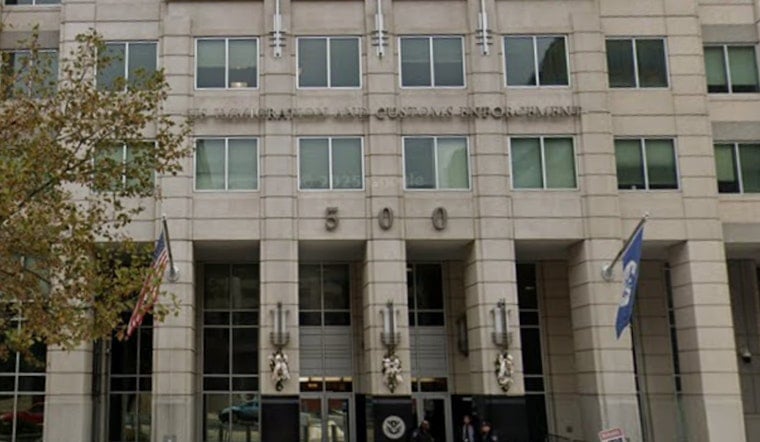
A mysterious $400 million detention complex tied to U.S. Immigration and Customs Enforcement has quietly appeared in a private construction database for Hammond, La., complete with a Sept. 1, 2026 construction start date. If it ever breaks ground, it would be an unusually massive project for the city. For now, the listing names ICE and the Department of Homeland Security as project owners but offers no public site address and no corresponding federal solicitation.
According to Project Salt Box, screenshots of a ConstructConnect project page describe the work as the remodeling of a mixed-use development that would fold in a detention facility, a medical facility and multi-residential units. The listing is marked as conceptual and shows a May 5 update, a project value of $400,000,000 and a Sept. 1, 2026 start date, with several local and regional contractors registered as interested. The project, as described, does not show up in federal contracting portals, and Project Salt Box notes that neither DHS nor the General Services Administration has posted any related solicitations.
City leaders say they are learning about all of this from the outside. Hammond Mayor Pete Panepinto told WBRZ in December that "No one from ICE, DHS, or any other entity has reached out to me about such a facility," and city offices have not offered additional details to reporters. That silence has not stopped residents in local online forums from trading guesses about where such a complex might go and whether Hammond’s water, sewer and power systems could carry the load.
Federal Plan And National Context
The curious Hammond listing lines up with a bigger federal push to turn large warehouses into a network of detention and processing hubs. The Washington Post reported in December that a draft solicitation it reviewed outlined seven major warehouse sites across the country, including one in Hammond, that together could stage more than 80,000 detainees. Under that draft, facilities would be expected to begin accepting detainees 30 to 60 days after construction starts, serving as larger regional hubs supplied by smaller processing locations.
Permits, Sites And What Is On Paper
On the ground in Tangipahoa Parish, the paper trail tells a very different story. Local permit records do not show anything close to a $400 million build or retrofit. Reporting in The Advocate found that as of late December, the largest new commercial permit on file was for just 7,541 square feet. That gap between what a $400 million overhaul would require and what is actually permitted is one key reason local officials say they have had no formal briefings.
In other words, on paper there is a giant detention project with a start date and an eye-popping price tag. On the parish rolls, there is hardly a hint of it.
Who Would Build It And How
Industry listings linked to the ConstructConnect entry show several subcontractors and suppliers tagged as interested, though the database does not indicate that anyone has submitted bids. That tracks with the listing’s conceptual status and the absence of an open solicitation.
Independent reporting has also detailed how the federal government has turned to a Navy contracting vehicle known as WEXMAC TITUS to hand out detention retrofit work to a pre-approved pool of firms instead of going through traditional public bids. Project Salt Box has separately tracked contract awards for two warehouse refits in Maryland and Arizona that are part of the broader effort to convert industrial buildings into processing facilities.
Political And Legal Stakes
The warehouse conversion program is already drawing fire well beyond Hammond. Documents released in February and reported by Reuters suggested the broader detention re-engineering effort could carry a price tag of roughly $38.3 billion. State attorneys general and local officials have pushed back in areas where potential warehouse sites surfaced, and critics argue that the size and secrecy of the plan raise basic questions about infrastructure capacity, oversight and conditions for detainees.
For Hammond, the new database listing adds a concrete detail to what had mostly been a swirl of reports and rumors, but it stops well short of a done deal. There is still no confirmed site, no local permit application and no posted federal solicitation tied to the project. City leaders and federal agencies have not publicly confirmed a Hammond facility, and residents are left to watch and wait as local officials and national lawmakers continue to dig into the plan.





