

























































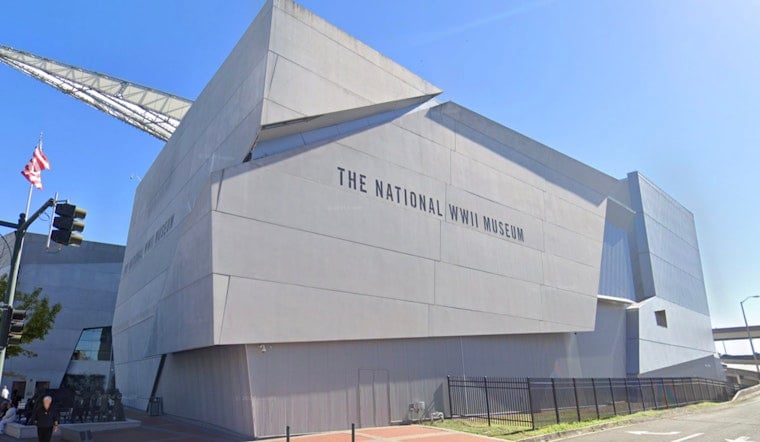
The U.S. Navy quietly picked a dramatic backdrop for a big regional play. On June 23, four Navy research and operational commands gathered at the National WWII Museum in New Orleans to sign a memorandum of agreement that launches the Gulf Coast Defense Catalyst, a new partnership meant to speed defense technology from lab bench to open water while shoring up the Gulf Coast’s industrial base. The plan is to connect naval labs, operational commands and local economic organizations so that promising research becomes fielded capability faster, with organizers casting the effort as equal parts national security upgrade and Gulf Coast jobs strategy.
According to New Orleans CityBusiness, the agreement links the Naval Information Warfare Center Atlantic, Commander, Naval Meteorology and Oceanography Command, Naval Surface Warfare Center Panama City Division and the U.S. Naval Research Laboratory, with the Greater New Orleans Development Foundation serving as the intermediary that helps keep everyone rowing in the same direction. Officials described the initiative as a way to line up Navy technology needs with commercial and academic research, so new tools move more quickly from concept to deployment. NIWC Atlantic commanding officer Capt. Matthew O’Neal put it bluntly, saying, "This partnership ensures our Sailors and Marines have the technological edge required to maintain maritime superiority."
Built on a regional tech network
The Gulf Coast Defense Catalyst does not start from scratch. It builds on work already in motion through NavalX and the Gulf Coast Tech Bridge, which have been running prize challenges, integration experiments and node partnerships that link industry and universities to real-world naval problems. NIWC Atlantic and NSWC Panama City have been active in the region, most recently standing up the Bayou Tech Node to push local advances in AI, sensing and uncrewed systems. NIWC Atlantic has described those efforts as regional "super-connectors" that shorten the path from discovery to deployment.
Programs, testbeds and a living lab
Partners sketched out a mix of near-term programming and longer-range ambitions. In the short run, they are talking about industry networking events, technology pitch competitions, collaborative research projects and STEM outreach to build a deeper local talent pool. On a longer horizon, the group is eyeing a C5I, or command, control, communications, computers, cyber and intelligence, testbed on Lake Pontchartrain along with a software living lab at the University of New Orleans research park. Those specifics, and the broader goals for the Catalyst, were outlined in the CityBusiness coverage of the June 23 signing. New Orleans CityBusiness reports that the partnership is intended to route regional research into fielded maritime capabilities while helping build a mission-ready workforce close to home.
Economic and workforce angle
State and regional officials are also eyeing the Catalyst as a way to lock in defense-related investment and higher-wage tech jobs along the Gulf Coast, rather than watching that work drift elsewhere. Recent Louisiana Economic Development announcements have highlighted parallel efforts to grow maritime and autonomy work in the state, which helps explain why leaders view a Navy-centered innovation hub as both a security asset and an economic development tool. Louisiana Economic Development has pointed to similar projects as examples of how defense research and development can translate into local hiring and manufacturing opportunities instead of staying confined to the lab.
UNO, Lake Pontchartrain and local testbeds
The University of New Orleans has already been positioning The Beach research and technology park as a hub for industry-university collaboration, and that pitch lines up neatly with what the Navy is trying to build. Faculty groups have been seeking Navy partnerships and autonomous-vehicle testbeds that make use of Lake Pontchartrain and the Gulf as real-world proving grounds. UNO’s research park and its NasTech group give the university a natural role in the Catalyst’s living-lab and software development plans. The Beach at UNO offers laboratory, office and waterfront testing space that organizers say will sit at the center of longer-term pilot work.
What happens next
After the memorandum signing, partners held a roundtable session to prioritize immediate tasks and sketch out an events calendar aimed at pulling in more industry and academic teams. The group plans to lean on the Gulf Coast Tech Bridge playbook, using experiments, integration events and prize challenges to evaluate new technologies and draw private-sector partners into the mix, following an approach that NSWC Panama City and naval partners have already tested in recent years. Naval Sea Systems Command materials describe those regional integration experiments as the operational template that the Gulf Coast Defense Catalyst now plans to build on.





