

























































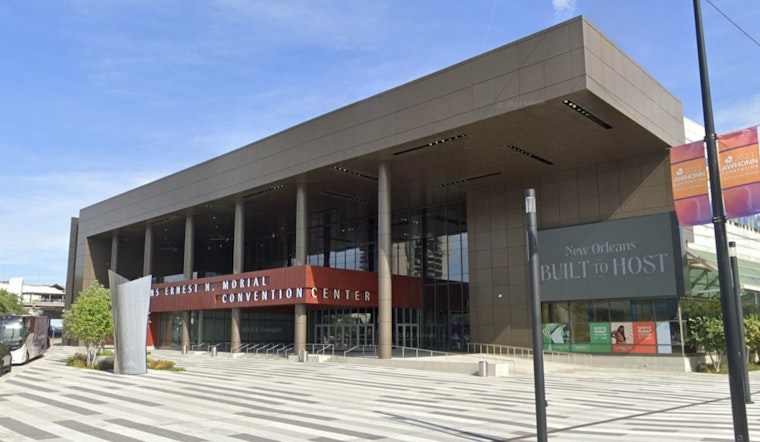
Justin Ryder, an associate professor at Northwestern’s Feinberg School of Medicine, found himself escorted out of a major diabetes conference in New Orleans on Friday, along with four other researchers, after handing out copies of an editorial that criticizes federal research policies. The group says they were simply passing around reprints of a Diabetes Care editorial warning that planned changes to NIH funding and oversight would harm diabetes science and patient care. The removals happened in the Ernest N. Morial Convention Center, just before a scheduled NIH keynote at the American Diabetes Association’s Scientific Sessions.
MedPage Today first posted video of the confrontation and reported that uniformed officers, along with on-site security, stopped attendees who were distributing the editorial, took away printed copies and, in some cases, confiscated badges. Conference goers told the outlet that officers warned they would be trespassing if they tried to come back into the meeting. No arrests were reported. The footage ricocheted through medical news sites and social media, quickly ramping up pressure on conference organizers to explain what happened.
Who Was Removed And Where It Happened
The group of escorted attendees included Diabetes Care editor-in-chief Steven Kahn, former American Diabetes Association leaders, and researchers Aaron Kelly, Irl Hirsch and Justin Ryder, according to The New York Times. The clash unfolded in a corridor outside a ballroom where an NIH representative had been scheduled to speak, turning what is usually sleepy pre-keynote hallway chatter into an awkward standoff over free expression at a scientific meeting.
What The Editorial Argued
The essay at the center of the dispute, published in the ADA journal Diabetes Care, urges scientists to push back publicly against policies the authors say are “dismantling” the U.S. biomedical research enterprise. The editorial and subsequent coverage highlight criticism of proposed cuts and regulatory shifts, including a plan flagged by outlets to trim roughly $5 billion from NIH’s 2027 budget. Chicago Tribune reporting described that potential budget reduction as a central concern for the editorial’s authors and for some conference attendees.
Association Response And Conference Rules
The American Diabetes Association told reporters that the attendees were removed for violating the meeting’s code of conduct, not for the substance of their views, according to the Washington Post. ADA media representatives have said the organization enforces rules against disruptive behavior in and around sessions, and that safety concerns and the logistics of hosting federal officials factor into how those rules are applied. Conference leadership has maintained that the issue is conduct, not content, even as debate swirls over where that line should be drawn.
Northwestern Connection And Reaction
Ryder, who focuses on pediatric obesity research through Northwestern’s Feinberg School of Medicine and Lurie Children’s Hospital, told the Chicago Sun-Times that being pulled from a scientific meeting for distributing a peer-reviewed editorial felt like “censorship.” Other researchers at the New Orleans gathering have echoed similar concerns in conversations on-site and online, arguing that handing out journal reprints is a routine part of scientific exchange. They are pressing the ADA to spell out how scholarly advocacy fits within its rules so that hallway discussions over policy do not risk a security escort.
What Happens Next
The ADA has said it plans to meet with the researchers involved after the conference wraps up, and organizers have told news outlets that their goal is to maintain a professional setting for scientific exchange, consistent with the association’s initial public statements and later coverage. For scientists who believe the incident interfered with normal academic back-and-forth, the confrontation has already become a case study in a larger, ongoing argument over how professional societies manage politics, security and the presence of federal officials at high-profile medical meetings.





