

























































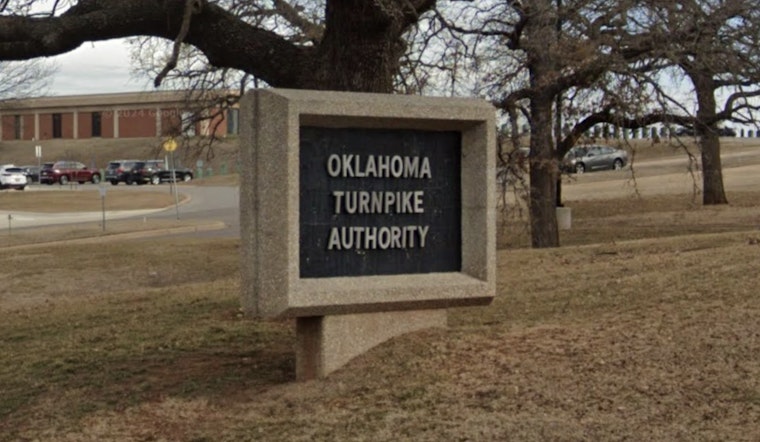
The Oklahoma Turnpike Authority on Tuesday queued up a big-ticket request, putting on its board agenda a proposal to ask the state’s Council on Bond Oversight to sign off on selling $1.5 billion in revenue bonds to keep construction rolling under the ACCESS Oklahoma program. The board also signed off on a resolution that would let the agency use eminent domain to secure right of way if talks with landowners fall apart, although OTA officials insist they are still focused on voluntary sales. Agency leaders say the new debt would be repaid from toll collections, not the state’s general-fund dollars.
OTA seeks $1.5 billion in new borrowing
As reported by Oklahoma Voice, the board’s request to the Council on Bond Oversight would steer bond proceeds into construction work and land purchases tied to ACCESS Oklahoma. The meeting packet listed the borrowing proposal alongside dozens of property-interest items that OTA says it needs to advance several corridor projects.
How the money would be used and repaid
OTA materials describe ACCESS Oklahoma as a 15-year buildout that would widen existing turnpikes, add interchanges and construct several new corridors, with the overall construction tab now estimated at roughly $8.2 billion. In agency releases and bond disclosures, officials repeatedly stress that the planned bonds are revenue bonds, meaning repayment is supposed to come from toll receipts, not state tax appropriations. Oklahoma Turnpike Authority documents spell out that repayment structure and the updated program cost.
Borrowing is ongoing
The authority has already dipped into the bond market for ACCESS work, closing a $500 million offering in 2023 and preparing for larger sales as individual projects reach construction. Municipal-market coverage has followed those sales and noted that more borrowing could be required as project costs and timelines shift. Bond Buyer has detailed the 2023 deal and OTA’s broader financing roadmap.
Properties in the crosshairs
The latest board packet reportedly listed more than 50 land parcels across Cleveland, Creek, Lincoln, McClain and Oklahoma counties that could be affected, a detail that has only added to the jitters among homeowners living near proposed alignments. As Oklahoma Voice noted, OTA cast the eminent-domain language as a backstop and said it still prefers negotiated deals. Local outlets have documented tense exchanges at OTA meetings and town halls as residents press for answers on acquisitions, with KOCO recounting earlier meetings where property owners pushed back hard.
Legal backdrop and oversight
The agency cleared a major legal obstacle in 2023 when the Oklahoma Supreme Court validated key bond-related steps for ACCESS, opening the door for OTA to resume seeking market financing. That opinion is part of the public record, and the authority has remained under watchdog scrutiny as lawmakers discuss possible changes to how turnpike expansions are planned and financed. Justia carries the court ruling, while a recent state audit found no “egregious wrongdoing” but still stirred interest at the Capitol in tightening oversight. NonDoc summarized the audit’s conclusions along with reactions from legislators and advocacy groups.
What comes next
If the Council on Bond Oversight gives the green light, OTA would move to price the bond sale and start steering proceeds into top-priority construction contracts and additional right-of-way purchases. Agency planning documents signal that further bond issues may be needed roughly every one to two years to cover the entire ACCESS Oklahoma program, with the exact timing tied to market conditions, construction schedules and any remaining legal fights. Oklahoma Turnpike Authority bondholder reports and board materials outline that sequencing and the toll-backed repayment model.
For residents along the planned routes, the immediate concern is whether negotiated sales can head off condemnation battles in court and how long nearby construction will drag on. For drivers around the state, the long-term question is how much of the growing debt load will show up on their toll bills. The Council on Bond Oversight’s decision will help determine the pace of both.



