

























































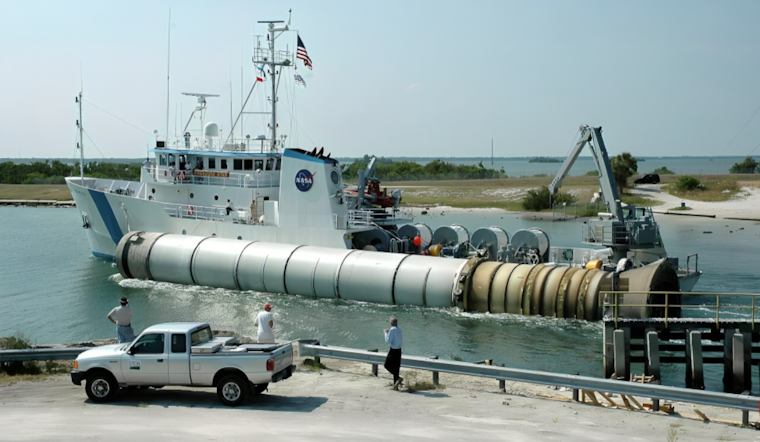
Port Canaveral is pressing ahead with plans for a dedicated waterfront basin tailored to commercial space activity, a move officials say would peel rocket recovery ships away from the port's jam-packed cruise and cargo scene. The idea is to give launch companies their own berths and offload space as more operators, from SpaceX and Blue Origin to smaller startups, crowd into the Space Coast. Port leaders say the basin could ease the logistical traffic jam that is forming as launch cadence climbs and maritime recovery work ramps up alongside everyday port business.
According to reporting from FOX 35 Orlando, Space Florida and Cape Canaveral Space Force Station are working with the port on concepts for a basin reserved specifically for space operations. FOX 35 notes that the proposal is intended to relieve congestion between space, cruise, and cargo vessels, and that the story was based on information shared by Space Florida and the Space Force. The outlet also pointed out that Florida has already poured significant money into spaceport infrastructure and that more investment will almost certainly be needed as demand climbs.
Space Florida: Big Numbers, Big Expectations
Space Florida highlights more than a billion dollars in spaceport and related projects around the state as evidence that Florida is rapidly building capacity for commercial launches. In a viewpoint published by the agency's CEO, leadership estimates Florida may need to support roughly 5,000 metric tons of cargo to orbit every year by 2035, a scale that would mean hundreds of additional launches and a lot more processing muscle on the ground. Those projections help explain why planners are eyeing waterside options that would shift recovery and processing activity away from the main cruise and cargo berths.
Study Maps Long-Term Options and Big Price Tags
The state-commissioned "wharf study" lays out several areas where extra wharf and berth capacity could be added, including a concept that would extend the Middle Turning Basin parallel to the Banana River. Local coverage of that analysis put the most realistic near-term build-out at about $2.1 billion and noted that federal funding and U.S. Army Corps of Engineers involvement would probably be required for the larger concepts. The report walked through Space Florida's review and the engineering work that underpins those waterfront options.
Port Logistics, Cranes and Charter Updates
Port Canaveral's own reporting shows the facility has already been reshuffling berths and equipment to handle maritime recovery work. SpaceX and Blue Origin are operating from dedicated areas at the Canaveral Cargo Terminal and the North Cargo Berths, a sign that space and seaport operations are already sharing tight quarters. The port's 2025 annual report to Space Florida describes landside and waterside changes, notes a new Article XXI added to the Port Charter that requires annual reporting and periodic public hearings on commercial space activity, and documents investments such as modified mobile harbor cranes and plans for additional heavy-lift gear. Taken together, those moves show how recovery, processing, and traditional port operations have become closely intertwined.
What This Means for the Space Coast
The basin proposal is meant to safeguard the port's cruise and cargo business while giving the space industry room to grow, but it comes with trade-offs for taxpayers, waterfront neighbors, and local planners. Port leadership is weighing the basin concept alongside costly cruise and landside projects, including the ongoing Terminal 5 price tag hits $78 million in work, that are already reshaping traffic patterns and construction timelines. Officials told local outlets that near term administrative changes and equipment upgrades may be phased in while environmental reviews, Corps feasibility studies, and federal funding decisions move forward.
There is no construction schedule yet. Port Canaveral and Space Florida say the basin remains a planning concept that would need environmental reviews, dredging studies, and multiple interagency approvals before major work could begin. The recent charter change and the required public hearings, detailed in the port's annual report, mean residents and local governments will have formal chances to weigh in as designs and financing options take shape. For now, planners describe the basin as a way to keep the Space Coast competitive as launch activity grows, while maintaining Port Canaveral's role as a major cruise and cargo hub.





