

























































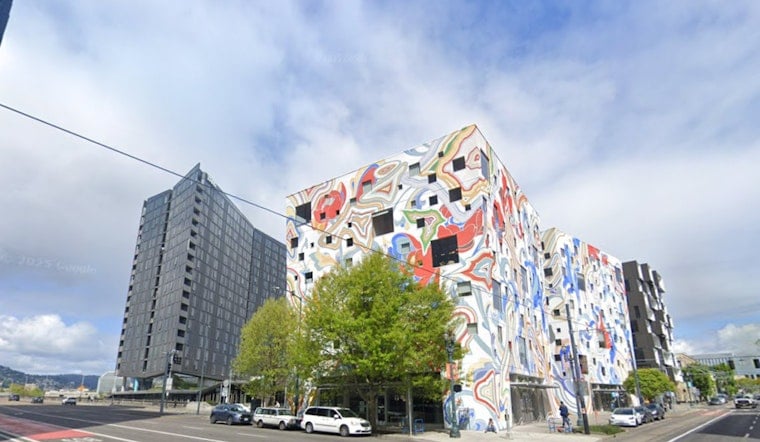
One of Portland’s most visible psilocybin centers has quietly gone dark. InnerTrek, the high-profile service hub co-founded by Measure 109 architect Tom Eckert, closed its licensed facility in late June after three years at the Burnside Bridgehead. The exit takes a marquee location off the city’s supervised psilocybin map at a moment when operators are rethinking how to make Oregon’s regulated model work in the real world. Company leaders are pitching the move as a pivot, not a pullback.
In a statement on its website, InnerTrek said June 2026 marked the successful end of the center’s three-year lease and confirmed it would not renew the Portland service site. The organization added that “we view this not as an ending, but as the completion of a meaningful chapter and the beginning of a new one,” according to InnerTrek. The group said it plans to shift its focus toward training, education and practicum partnerships across the United States rather than maintaining a single brick-and-mortar service center in Portland.
Reporting by The Oregonian/OregonLive notes that InnerTrek opened its Portland service center in late 2023 in the Fair-Haired Dumbbell and that it supported roughly 1,270 clients and participants over its three-year run. The outlet also published the center’s advertised starting prices, about $850 for group journeys and roughly $1,500 for individual administrations, figures that have again stirred debate over whether Oregon’s regulated system is realistically priced for ordinary residents. Eckert, who helped launch the initiative drive in 2015 that ultimately became Oregon’s psilocybin framework, remains a prominent figure in the movement, according to the Sheri Eckert Foundation.
Regulatory history
State records list InnerTrek’s service center as licensed by Oregon Psilocybin Services at 11 NE Martin Luther King Jr. Blvd., Suite 601 in Portland. A default final order from the Oregon Health Authority imposed a $3,000 civil penalty after investigators determined that facilitators left the administration area during a May 18, 2024 group session and did not adequately document or secure secondary doses. Regulators classified the issues as Category III and Category IV violations under Oregon’s psilocybin rules.
What the shutdown means for training and access
InnerTrek has said the closure will free it up to scale training programs and practicum partnerships across the country, including work in Colorado and New Mexico that is highlighted on its course and practicum materials. The Portland Business Journal reported that the center shut down in late June and that leaders framed the decision as a strategic pivot toward education and partnerships rather than a complete exit from Oregon’s psilocybin service landscape.
Advocates who helped write Measure 109 say strong training and ethical standards were always central goals of the program, and organizations connected to the movement continue to push scholarships and sliding-scale options in an effort to widen access. Critics respond that high per-session prices, combined with a dense thicket of state regulations, have made legal, supervised psilocybin difficult for many Oregonians to afford.
For Portland clients, InnerTrek’s shutdown shrinks the list of local licensed service centers, even as training pipelines and research partnerships tied to the group remain active. Regulators and providers alike say the coming year will be a stress test for Oregon’s licensed model and for its ability to balance safety, affordability and growth.





