

























































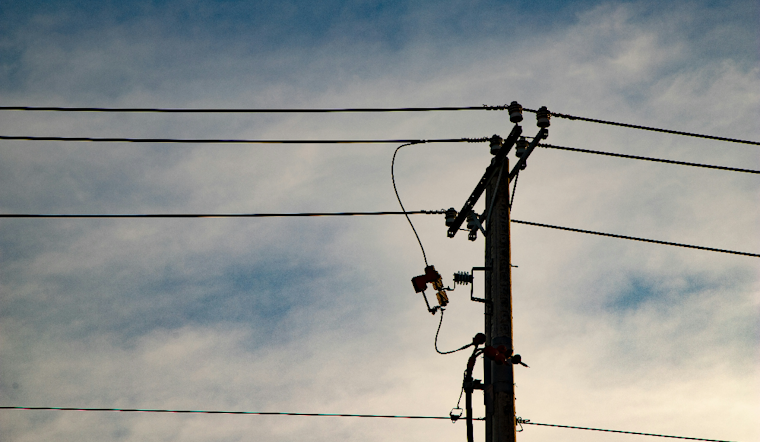
By Thursday afternoon, large swaths of the Pittsburgh area were suddenly in the dark, as severe thunderstorms barreled through, ripping down trees and taking power lines with them. Utility crews fanned out across Allegheny County and its neighbors, surveying splintered poles, blocked roads, and damaged homes and cars where falling limbs did the most harm.
At 3:50 p.m., Duquesne Light Company’s outage tracker showed 40,102 customers without electricity, with roughly 37,386 in Allegheny County and 2,720 in Beaver County, according to WPXI. Officials stressed that those numbers were only a snapshot of a fast-changing situation as the storm line marched east across western Pennsylvania.
FirstEnergy’s West Penn Power also showed mounting outages on its tracker as the storms rolled through. The company’s Pennsylvania outage center, updated throughout the afternoon, instructs customers to report outages by calling 1-888-544-4877 or by using the online outage map. FirstEnergy says its crews focus first on high-voltage transmission lines and substations, then on critical facilities such as hospitals and water plants, before moving on to neighborhood-level repairs. Estimated restoration times and repair priorities are posted for customers on the utility’s site via the FirstEnergy outage center and its broader updates from FirstEnergy.
Where The Lights Went Out
Utility trackers showed the heaviest Duquesne Light impacts in Allegheny and Beaver counties, according to WPXI. West Penn Power’s system, which covers different territories, listed about 7,250 outages statewide with local counts that included Butler County (1,877), Washington County (1,669), Lawrence (274), Indiana (257), Greene (276), and Somerset (133). Those county-level tallies reflect two separate utility service areas and are expected to shift through the evening as crews repair damaged circuits.
How Crews Are Responding And How Residents Can Stay Safe
Repair teams are working from the top of the system down, restoring large transmission lines and substations first to bring back power for the greatest number of people, then moving to smaller neighborhood outages. Duquesne Light has urged customers to report outages and any hazardous conditions through its online outage map or by calling 1-888-393-7000, to sign up for outage notifications, and to steer clear of any downed or hanging wires while crews are on the streets. The utility’s outage support page from Duquesne Light Company outlines step-by-step how to report issues and stay safe during restoration work.
What Forecasters Saw Coming
The Storm Prediction Center and local National Weather Service offices had placed the region under a series of watches and warnings as the storms approached, flagging damaging wind gusts and pockets of hail as the main threats, both capable of knocking down trees and power lines. Real-time alerts, tracked by the National Weather Service and local TV stations, shaped public safety messages and utility response as the line of storms swept across the area. Platforms such as WeatherBug and local coverage from KDKA/CBS Pittsburgh captured the rapid-fire warnings and early reports of storm damage.
Why These Outages Keep Adding Up
Utility officials and emergency managers say storms like Thursday’s are part of a broader rise in severe convective weather that is increasing both the scale and the length of power outages. Duquesne Light’s recent analysis points to climbing storm impacts across the 2020s, and local reporting earlier this spring documented multi-day outages that stretched restoration crews to their limits, trends that have pushed fresh debate over tree trimming and long-term grid upgrades. Reporting from Duquesne Light Company and the Pittsburgh Post-Gazette offers a broader context on how and why these outages are changing.
Residents who are still without power are urged to check their utility’s outage tracker for the latest estimated restoration times and to report any hazards, such as downed wires or blocked roads, directly to their electric company. Local emergency agencies and the National Weather Service will continue issuing updated warnings and travel advisories as cleanup and restoration work continues across the region.



