

























































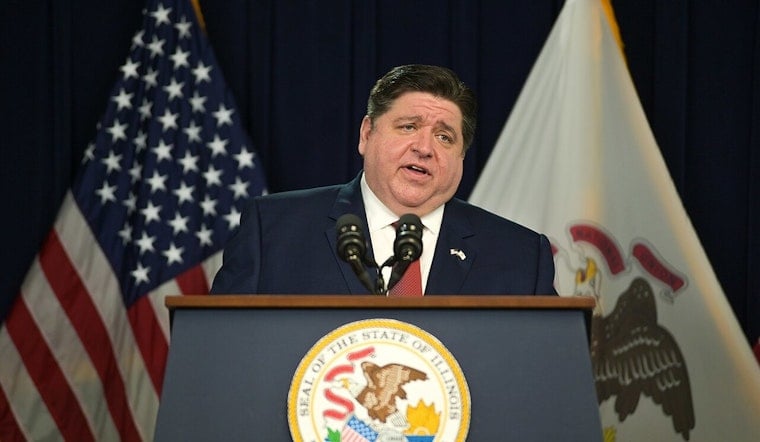
Gov. J.B. Pritzker is set to make Illinois’ next spending plan official on Tuesday in Chicago, signing a record $55.9 billion state budget that leans hard on the digital economy for new cash. The package tops off a late and contentious spring session with fresh fees and taxes trained on social media platforms, programmatic advertising, cryptocurrency trades, fantasy-sports operators and certain prediction-market wagers. It also tucks in an $830 million supplemental for the current year, leaving the operating plan for Fiscal Year 2027 essentially flat.
The General Assembly signed off on the $55.9 billion balanced budget on June 1. Lawmakers paired it with a revenue package carried in Senate Bill 3019, according to Capitol News Illinois. Their stated goal was to tap growing online sectors for “new money” while steering clear of direct hikes to income or broad sales taxes.
What the new levies do
Senate Bill 3019 creates a 10% “Targeted Advertising Services” tax on programmatic, targeted ads and a graduated “Social Media Platform Fee” tied to the size of a platform’s Illinois user base, as laid out in the enrolled bill text from the Illinois General Assembly. That enrolled language says the ad tax kicks in Jan. 1, 2027, and it restricts certain local governments from layering on similar taxes of their own.
A legal analysis of the same measure notes a 0.2% “Digital Asset Tax” on specified cryptocurrency exchanges, a 15% gross-receipts tax on fantasy-sports operators, and a two-tiered tax structure for prediction-market style wagers. Kilpatrick Townsend points out that the digital-asset levy would be collected by exchanges and brokers and that licensing rules for fantasy-sports operators are wrapped into the package.
How much revenue lawmakers expect
Top Democrats say the mix of new and tweaked taxes is designed to pull in hundreds of millions of dollars without touching personal income or broad sales tax rates. Some of the social-media and corporate changes alone are expected to bring in roughly $500 million, according to CBS Chicago. Separately, new taxes on digital-asset transactions and fantasy sports are projected to generate about $65 million, Capitol News Illinois reports.
Budget negotiators say that money, combined with several fund sweeps, is what allows the plan to keep support in place for K-12 schools, hospitals and other core services while still touting a balanced ledger.
Signing and next steps
The fiscal-year implementation bill (H.B. 2949) and the omnibus spending measure cleared both chambers during the late spring session and were formally sent to the governor, according to the Illinois General Assembly. Senate Bill 3019 was also enrolled and moved to Pritzker’s desk. The governor is scheduled to sign the full package in Chicago on Tuesday, according to ABC7 Chicago.
Legal and political fallout
Tax attorneys are already flagging parts of the plan as likely court fodder, citing potential federal preemption issues and Commerce Clause questions. Several experts warn that the new digital-advertising and social-media taxes look a lot like policies that have been struck down or dragged into lengthy litigation in other states. Kilpatrick Townsend highlights both constitutional risks and conflicts with federal law.
At the local level, lawsuits are already pending over earlier Chicago-only social-media levies, as reported by WTTW. If Pritzker signs on as expected, parts of the new statewide package will roll out on different timelines: the fantasy-sports gross-receipts tax takes effect July 1, while the targeted-ad tax and many of the digital-asset provisions start Jan. 1, 2027. Businesses, online platforms and the courts in both Springfield and Chicago are poised to test just how far Illinois can go in taxing the digital frontier.





