

























































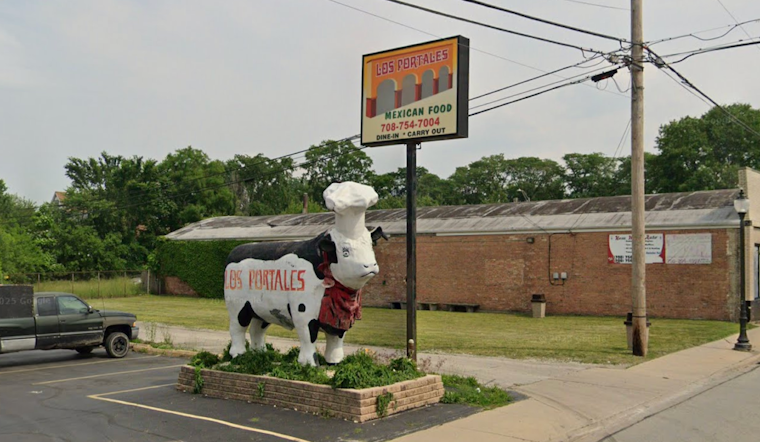
Downtown Chicago Heights went from weekday normal to tense silence in a matter of minutes this week, after federal enforcement officers swept in near a popular Mexican restaurant and detained a man in front of stunned onlookers.
Witnesses said officers in tactical gear climbed out of a parked truck near Los Portales, quickly took a man into custody and drove off, leaving the usually busy strip oddly still. Customers and nearby shopkeepers described a wave of fear that emptied sidewalks and quieted dining rooms, even after the agents were gone. The encounter also sent organizers and volunteers back into the streets to keep watch for future enforcement actions.
The Department of Homeland Security said in a statement that Immigration and Customs Enforcement arrested Bruno Leonardo Rodriguez‑Desiderio in Chicago Heights on June 7 and that he will remain in ICE custody pending removal. The DHS statement, as reported by Chicago Tribune, says Rodriguez‑Desiderio entered the U.S. from Mexico near El Paso on Dec. 17, 2022, and received a final order of removal from an immigration judge on Jan. 31, 2024.
Scene at downtown businesses
Inside Los Portales, diners and employees said they watched the arrest unfold just outside. Several recalled the moment the agents stepped out of the truck and moved in, and the way the room seemed to freeze.
“The restaurant was unusually quiet," Sandra Godoy told Chicago Tribune. She said people hesitated to get up from their tables or even look toward the windows.
Across the way at Heights Fresh Market, manager Benjamin Cabral said he locked the store’s doors and put an employee at the entrance after hearing reports that agents were in the area. The move, he explained, was less about playing hero and more about trying to shield nervous customers and staff, a sign of how federal enforcement activity can ripple through day‑to‑day business in a small downtown.
Part of a wider enforcement campaign
The arrest lands against the backdrop of last fall’s “Operation Midway Blitz,” a broad federal immigration enforcement campaign that swept across the Chicago region. State and local reviews have tallied roughly 3,800 detentions and about 2,500 deportations tied to the operation, and public hearings have pressed officials on the tactics agents used.
Chicago Sun‑Times coverage has followed those developments as testimony and documents continued to surface.
Rapid‑response groups mobilize
Local advocates say the Chicago Heights arrest has already nudged community networks back into high gear. They have revived “know your rights” trainings and pulled together volunteer patrols to watch for enforcement activity and help people respond if relatives or neighbors are detained.
Neighborhood volunteers say patrols in Chicago Heights and nearby Blue Island now focus on collecting witness accounts, sharing real‑time updates and connecting detained people with attorneys and family members. WTTW has reported on how these rapid‑response networks adapted after last year’s sweeps and how they are adjusting yet again as new cases emerge.
Legal implications
Because Rodriguez‑Desiderio already had a final order of removal, federal law allows ICE to detain him while removal proceedings move ahead. Even so, the broader Midway campaign has faced significant judicial scrutiny.
Court rulings have ordered reviews and, in some instances, releases for people arrested in the operation, as lawyers argue that agents overstepped legal limits. Appeals courts have at times stepped in while that litigation continues, leaving many families in a kind of legal limbo. ABC7 Chicago has covered recent court action tied to the sweep.
For now, downtown Chicago Heights is operating in a cautious calm. Business owners say they are keeping a lower profile, watching who pulls up outside and how customers react. Organizers hope that continued monitoring, legal outreach and community pressure will limit any future surprises. Residents and merchants told reporters they want clearer communication from both federal and local authorities about enforcement plans so people can go about their daily routines without wondering if the next truck that parks outside is bringing in customers or agents.





