

























































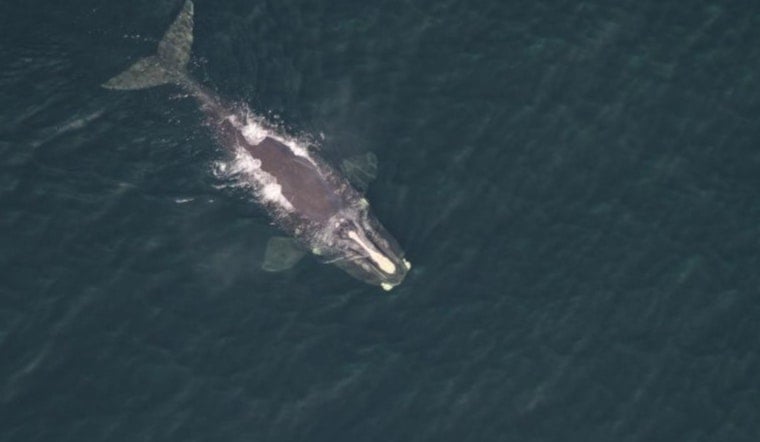
A young North Atlantic right whale that researchers photographed off Cape Cod in April has turned up in serious trouble in Canada’s Gulf of St. Lawrence, and rescuers are now in a cautious race to find it again. The whale, cataloged as #5192 and identified as an unnamed five-year-old male, was spotted by aerial survey crews on June 8 near Shippagan, New Brunswick, with rope in its mouth and several body-lengths of fishing line trailing behind. Responders say fresh wounds and rope-rub marks point to a recent entanglement, which gives them a better shot at cutting the animal free if they can safely reach it. Teams in both the United States and Canada are tracking reports and standing by for a potential rescue, as long as the weather and safety rules cooperate.
What researchers saw
Scientists at the Anderson Cabot Center for Ocean Life at the New England Aquarium confirmed the whale’s identity and recent sighting history. According to New England Aquarium, catalog #5192 was last seen without gear in Cape Cod Bay on April 21, and the pattern of marks on its body fits with a recent entanglement. Heather Pettis, a senior scientist with the Aquarium, said responders are cautiously optimistic that a safe disentanglement could reduce long term damage, noting this is the whale’s fourth documented entanglement and the first time it has been seen dragging attached fishing gear.
Search and rescue plans
Fisheries and Oceans Canada reported that the whale was first seen entangled during a routine aerial survey on June 8, and officials said they hope to attach a satellite tag to the rope in order to track the animal ahead of any on-water response, as reported by CBS News. DFO sources told reporters that an earlier attempt to tag the gear was cut short by rough weather and that follow up searches are continuing when conditions allow, according to reporting by Global News. If spotters manage to relocate the whale, trained response crews such as the Campobello Whale Rescue Team, one of the few groups authorized to work on large entangled whales in Canadian waters, could be called in. Responders stress that disentanglement is inherently dangerous work and that they move in only when the sea state, crew safety and whale behavior all line up.
Population context and the danger of gear
The North Atlantic right whale is critically endangered, with federal estimates putting the entire population at roughly 380 animals, a figure that makes each injury a serious setback for recovery. NOAA Fisheries cites that estimate and lists fishing gear entanglements and vessel strikes as the top causes of serious injury and death for the species, while New England Aquarium reports that more than 86% of right whales have been entangled at least once. That mix of a tiny population and frequent encounters with ropes and lines helps explain why managers are scrambling to track this individual and are pushing hard for safer fishing technologies.
What managers and fishers are doing
Canadian regulators have put a national Whalesafe Fishing Gear Strategy in place and use adaptive closures, dynamic speed slowdowns and other measures to cut entanglement risk in high use areas, according to a Government of Canada announcement. Fisheries and Oceans Canada says pilots of on demand, or so called ropeless, gear and tests of weaker lines are already underway, and officials argue that wider use of those tools will be crucial to preventing future injuries. Agencies on both sides of the border emphasize that monitoring, fast reporting and shifts in technology have to work together if the few remaining whales are going to have a real shot at recovery.
How the public can help
Members of the public who spot an entangled whale or any marine mammal in distress are urged to document what they see, note the time and GPS location, and report it immediately rather than trying to intervene. NOAA Fisheries recommends calling (866) 755-6622 to report injured, dead or entangled marine mammals in the Greater Atlantic region and using the Whale Alert app to submit photos and coordinates. Observers should keep a safe distance, avoid blocking vessels or trained responders, and try to provide clear images that can help experts decide on the safest response.
Next steps
Officials say search flights and vessel surveys will continue whenever the weather cooperates, and any tagging or disentanglement attempt will only move forward if responders can get close enough to the whale without putting people or the animal at greater risk, according to Global News. For now, the case of catalog #5192 is a stark reminder that fishing gear entanglements remain an immediate and preventable threat to the species recovery.





