

























































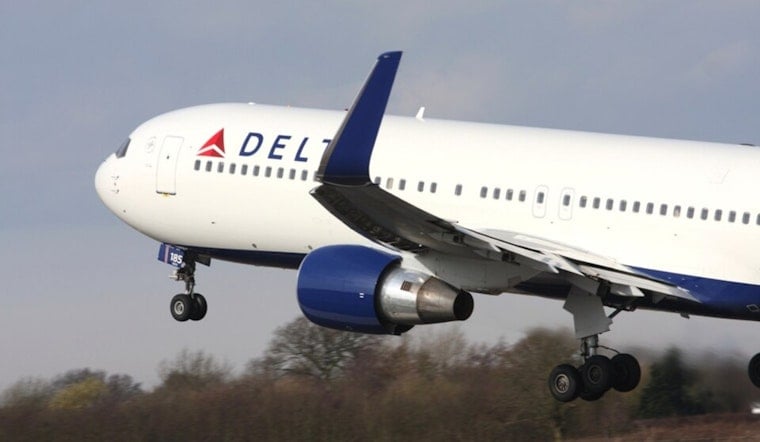
What started as an overnight hop from Salt Lake City to Amsterdam turned into a bruising ordeal, and now 20 passengers from that flight are taking Delta to court. The group filed a lawsuit Friday in Salt Lake City state court over the July 30 incident on Delta Flight 56, when the jet plowed into violent turbulence that injured 24 passengers and seven crew members.
The complaint claims the pilots continued toward developing convective weather despite warnings and that the seatbelt sign was off with no warning to the cabin before the turbulence hit. Plaintiffs say they walked away with bruises, internal injuries, broken bones, and concussions, along with lingering anxiety and other psychological fallout.
What the NTSB found
According to a preliminary report from the National Transportation Safety Board, the Airbus A330 ran into severe turbulence near Creston, Wyoming, at about 37,000 feet. The aircraft experienced vertical accelerations up to roughly 1.75 g and roll swings as large as 40 degrees.
Flight data show the upset lasted about two and a half minutes, during which the autopilot disengaged while the jet repeatedly climbed and descended. The crew diverted to Minneapolis–Saint Paul, where 24 people were evaluated, and 18 were taken to hospitals. Investigators have recovered flight data and cockpit voice recorder information and are continuing to dig into weather and operational issues, according to the NTSB.
What the lawsuit says
The lawsuit, filed in Salt Lake City, claims the flight crew had been warned about the potential for developing convective weather and thunderstorms, yet kept flying toward the problem area without alerting passengers. The filing lists physical and emotional injuries and identifies plaintiffs from Utah, California, Idaho, Montana, South Carolina, and a family from Norway. Those allegations and details of the complaint were reported by FOX 13 News.
Casey DuBose, an attorney for the passengers, told FOX 13 News that "the aircraft just continues straight on towards that area of known turbulence." He said the crew "had the authority to make a 90-degree change to get away from the weather, and they didn't do that." According to DuBose, some passengers were slammed into the cabin ceiling and "sustained broken bones and significant concussions."
Legal stakes
Because the trip was an international itinerary to Amsterdam, many of the claims are likely to fall under the Montreal Convention. That treaty creates strict liability for airlines for passenger bodily injury up to a set limit and then shifts the burden of proof for amounts above that figure.
Aviation attorneys note that if investigators and flight data ultimately show the crew flew into forecast convective activity, it could weaken an airline's argument that these injuries were simply unavoidable. Aviation Law Group, which has been looking into the incident and represents some injured passengers, outlines that legal framework and says it is pursuing discovery into flight deck decision-making and weather data, according to Aviation Law Group.
Delta response and what's next
Delta has issued a statement thanking emergency responders and saying its Delta Care Team is working directly with customers to support their immediate needs while the company cooperates with investigators, according to The Independent.
The NTSB says specialists in meteorology, air traffic and operations are assigned to the ongoing investigation and have already analyzed flight data, according to the preliminary documentation from the NTSB. On the civil side, plaintiffs' attorneys say they plan to focus discovery on weather forecasts, radar imagery and the crew's decision-making as the state court case moves forward.



.jpg)