

























































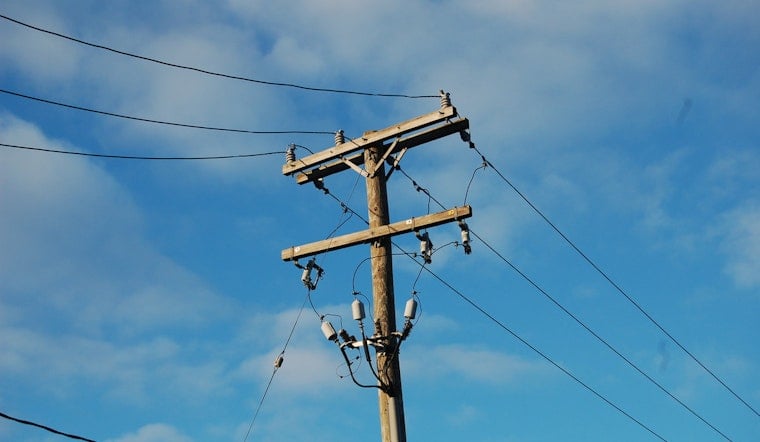
Seven miles of power lines around Mount Hood are disappearing from the skyline, and this time it is on purpose. Portland General Electric has started burying roughly seven miles of overhead distribution lines along U.S. Highway 26 near Government Camp and on Mount Hood, a move the utility says is meant to cut wildfire risk and keep the lights on for mountain resorts and nearby communities.
What the project covers
The utility's Summit-Summit 13, Mt. Hood Undergrounding project will convert about seven miles of distribution lines from overhead to underground in the Government Camp corridor. The work is part of a broader slate of system hardening projects that PGE says are intended to improve service reliability and reduce wildfire risk, especially in high fire risk zones, according to Portland General Electric.
Who benefits and PGE’s message
The new underground line will serve Timberline Lodge, Mt. Hood Meadows, Mt. Hood Skibowl and surrounding communities near Government Camp. In a statement to KPTV, PGE officials said, "This investment is about protecting communities, critical infrastructure and one of Oregon’s most important recreational and economic assets."
Timeline and local impacts
Work began in May 2026 and is being carried out in segments, with roughly half of the corridor scheduled for construction in the summer of 2026 and the rest planned for summer 2027. PGE warns that construction will bring drilling operations, heavy equipment near U.S. 26, temporary traffic lane closures, a closure of the Snow Bunny parking area and possible trail impacts during the 2027 segment. The company says it will share updates with the community and asks that questions be sent to its project contact, as detailed by PGE.
Why burying lines matters
Burying distribution lines removes a key ignition source, such as branches, wind blown debris or failing equipment, and can boost service reliability when the weather turns ugly. The undergrounding work is one piece of a larger wildfire mitigation strategy that also includes enhanced vegetation management, AI cameras and weather stations, measures that industry reporting says have reduced ignition risk in the Mount Hood corridor, according to TD World. The importance of protecting the area for recreation and the regional economy is also underscored by the Mt. Hood National Forest.





