

























































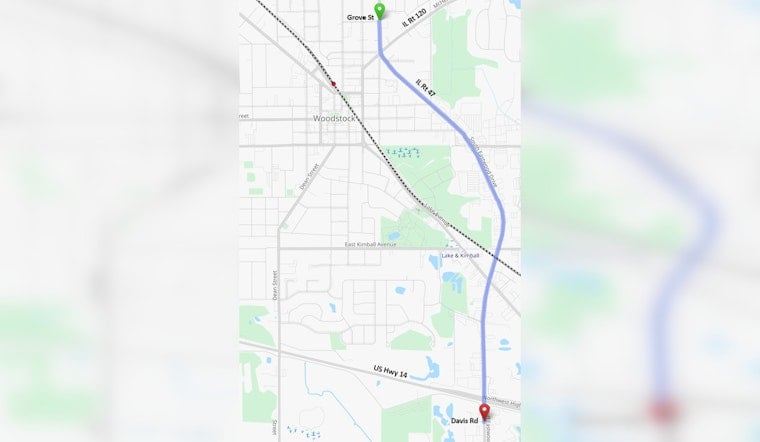
Woodstock, the historic commuter town northwest of Chicago with just over 25,000 residents, is lining up a slate of projects that could dramatically reshape its downtown and key transportation corridors. A long-delayed Route 47 widening, a planned Metra layover yard, and a potential redevelopment of a 9-acre former Die Cast industrial site next to the train station are all hitting decision points at roughly the same time.
Route 47 widening is moving into construction
The biggest public piece of the puzzle is the Illinois Route 47 widening, a multi-year corridor rebuild that folds in new lanes along with major water, sewer, and stormwater upgrades. City documents estimate the total project cost at about $78.4 million, with roughly $25.1 million coming from the city and outside grants helping pay for utility relocation. Officials say utility work is already underway and road construction is expected to start in spring 2026, with completion targeted around 2028, according to the City of Woodstock.
Metra's yard could mean more trains and jobs
Metra is advancing a Woodstock Layover Yard that would consolidate train storage and light-maintenance functions near town and give the Union Pacific Northwest line more operational flexibility. Agency materials show a plan for seven storage tracks, fueling and maintenance facilities, and space for crew operations. In theory, that setup could support up to 21 additional weekday trips and generate both construction and long-term operations jobs. The project is still in environmental review and preliminary engineering, with more public outreach and formal NEPA steps ahead, according to Metra.
The Die Cast parcel is the downtown wildcard
Right next to the station, the city has long pitched the roughly 9-acre former Die Cast property as a catalytic redevelopment site that could connect new housing directly to Woodstock's historic square. Recent proposals, including concepts from Murphy Development Group, sketch out roughly 150 to 200 market-rate apartments, commuter parking, and ground-floor retail. The city has issued a formal request for expressions of interest and is negotiating with potential builders, weighing tax-increment financing and other incentives while trying to keep downtown character and market risks in balance, according to the Northwest Herald.
A stadium could accelerate everything
The ongoing drama over a new Chicago Bears stadium in Arlington Heights has become an unexpected plot twist for Woodstock planners. A major stadium inside Cook County could shove extra event and concert traffic out along the Metra lines into surrounding commuter towns. State lawmakers and the team are still hashing out incentives and possible sites, with Arlington Heights and Hammond, Indiana, both in the mix and no clear resolution yet, according to The Associated Press. Bisnow notes that an Arlington Heights stadium would sit about seven Metra stops from Woodstock, a proximity Mayor Michael Turner has suggested could funnel concertgoers and spillover spending straight to the square.
Big benefits and real trade-offs
City leaders argue that the combination of these projects could bring in new residents, customers and jobs, giving Main Street businesses a steadier stream of foot traffic. Planning materials also spell out some of the costs. Metra's screening and environmental documents identify mapped wetlands, possible habitat concerns and Sensitive Aquifer Recharge Areas that will need mitigation through NEPA and design work, and local reporting has chronicled neighbors keeping a close eye on density, parking and historic preservation. The U.S. Census Bureau pegs Woodstock's population at about 25,892, a base the city says it can grow from as it targets more than 30,000 residents over the next decade, according to Metra and the U.S. Census Bureau.
What to watch next
In the near term, the key milestones to watch are Metra's NEPA and preliminary engineering benchmarks for the yard, bidding and scheduling updates on Route 47, and whether the city can nail down a development deal for the Die Cast site. Public meetings and funding decisions over the coming months are likely to determine how quickly any of this turns into visible change. If the pieces fall into place, and if state moves on infrastructure funding or the Bears stadium site do not scramble timelines, Woodstock could shift from big plans on paper to a very different-looking downtown within just a few years, as city materials and regional coverage have been tracking.





