

























































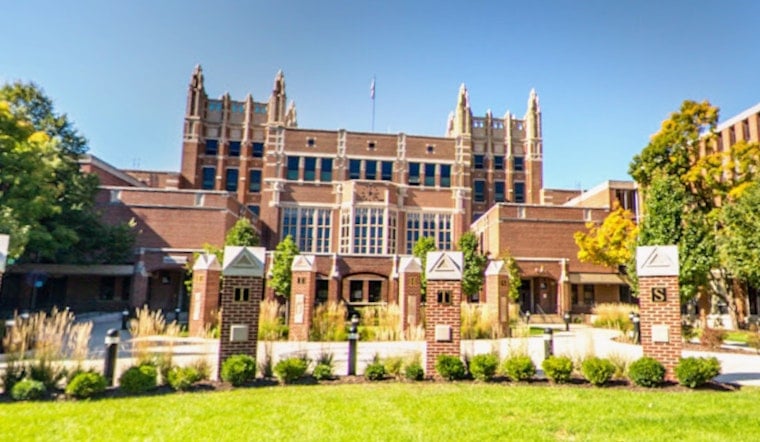
Evanston students took “hands-on learning” to its most literal extreme Monday, starting the move of a fully built two-story house across town. The structure rolled out from Evanston Township High School toward a new neighborhood near the North Shore Channel, turning a summer morning into an unusually large school project. The destination is not a display lot: It is meant to become an affordable home.
According to CBS Chicago, students began moving the house from ETHS at 1600 Dodge Ave. to 2120 Darrow Ave., roughly six blocks away. The home was built through the school’s Geometry in Construction course, where students learn math while helping construct houses that are later sold as affordable housing.
The City of Evanston had warned residents to expect temporary parking restrictions, street closures and delays along the route. For neighbors, that meant a fairly unusual traffic obstacle: not a crash, parade or roadwork crew, but an entire house making its way through Evanston.
A Classroom Project With A Permanent Address
The program connects ETHS with the city and Community Partners for Affordable Housing. Students handle much of the construction as part of their coursework, while licensed contractors complete interior and on-site work before the home is sold to an eligible buyer.
The Darrow Avenue site is part of a larger housing plan approved by Evanston officials. City Council documents describe plans for three ETHS-built homes at 2120 and 2122 Darrow Avenue over the 2025-26, 2026-27 and 2027-28 academic years, with the houses placed into a community land trust.
That model is designed to keep the homes affordable beyond their first sale. In its housing plan, the city says the ETHS partnership has produced 15 Community Land Trust homes since 2007 for households earning below 120% of the area median income, creating a rare overlap between public education, workforce training and new housing.


