

























































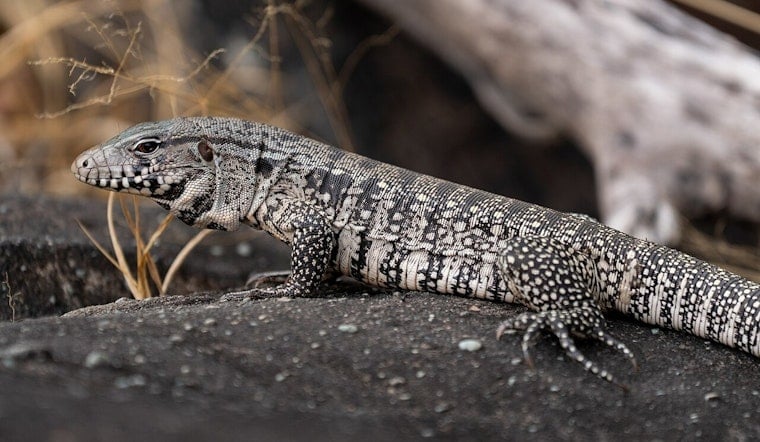
A dog-sized, egg-eating lizard is no longer just a fish tale in southeast Georgia. State wildlife officials say the Argentine black-and-white tegu has established itself in parts of the region, and crews are scrambling to step up trapping as hatch season arrives. The lizard can stretch to roughly 4 feet long, weigh more than 10 pounds, and feast on eggs, fruits and small animals. With reproducing animals now confirmed in Toombs and Tattnall counties, biologists are urging residents to stay sharp this month.
DNR ramps up trapping and research
The Georgia Department of Natural Resources is leading targeted trapping in Toombs and Tattnall counties, teaming up with partners to study what the tegus are eating and how they are reproducing. According to the Georgia Department of Natural Resources, captured tegus are humanely euthanized, then examined at Georgia Southern University. Officials say early detection and rapid response are the best shot at keeping the lizards from gaining a foothold anywhere else.
What biologists warn the lizards can do
Biologists describe these tegus as opportunistic omnivores with a taste for ground nests. They will eat the eggs of quail and turkeys along with reptile eggs, including those of gopher tortoises and American alligators, according to CBS Atlanta. Research also shows tegus can carry salmonella, and females can produce roughly 35 eggs a year, with hatchlings in Georgia expected in June and July. Their size, strong swimming ability and knack for brumation, a hibernation-like slowdown, are among the traits that make wiping them out a tall order.
Sightings across the state
Wildlife officials say a breeding population is established in Toombs and Tattnall counties, and scattered reports have surfaced in other parts of Georgia. As reported by GPB, senior wildlife biologist Daniel Sollenberger said tegus have turned up in reports from dozens of counties. That mix of confirmed and unconfirmed sightings is why the state is asking people to send photos along with dates and precise locations whenever they report an animal.
What is legal and what is banned
Georgia officials have already moved to clamp down on exotic reptile ownership by adding Argentine black-and-white tegus to the state wild-animal list. That change banned importing and breeding the species and set a registration deadline for existing owners under state rules. The Georgia Department of Natural Resources outlines the rule change and registration requirements on its wild-animal rules page. Regulators say the restrictions are meant to cut down on released pets and close off easy pathways for new introductions.
How to report and what residents can do
Residents who spot a tegu are asked to snap a photo if possible, note exactly where they saw it, and report the sighting online through Georgia Invasives or by calling the DNR tip line. Scientists with the U.S. Geological Survey are tracking trapping efforts and experimenting with bait strategies to improve removal success, work that backs up local control campaigns. Local reporting notes the DNR can work with landowners at confirmed sites to provide live traps and guidance, but staff stress that people should not handle tegus because of bite risks and potential disease exposure.
With eggs expected to hatch in the coming weeks, officials say this is a crucial time to spot any new animals. If you think you have seen a tegu, get a clear photo from a safe distance, write down the time and place, and file a report so biologists can move quickly.





