

























































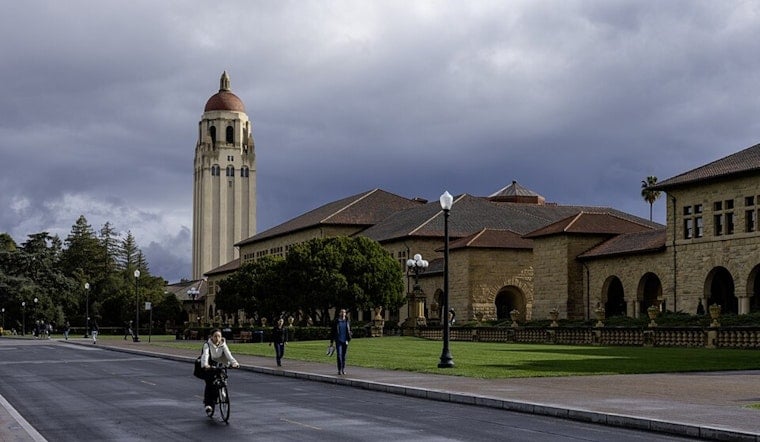
Stanford University has moved to block a federal historic designation for the former Sigma Chi chapter house at 550 Lasuen Mall, turning a long‑simmering clash between alumni and campus leaders into a full‑blown standoff. Alumni argue the house deserves national recognition for a 1965 stand against a whites‑only fraternity rule, when students pledged Black student Kenneth Washington. University officials acknowledge the moment was significant, but say it does not rise to the level required for a National Register listing.
Federal reviewers have already found the Alpha Omega Chapter house at 550 Lasuen Mall eligible for the National Register of Historic Places. But because the owner objected, the site has not been formally listed. The National Park Service recorded the status on June 3, 2024, as “OWNER OBJECTION DETERMINED ELIGIBLE.”
Stanford says its heritage‑preservation staff reviewed the nomination and concluded the 1965 episode was “not sufficiently groundbreaking” to warrant a national historic designation, according to Stanford University. Alumni and student reporters say that after the university took control of the building in August 2023, it removed a campus plaque that had commemorated the chapter’s 1965 action, per The Stanford Daily.
Former residents and alumni say the moves chip away at what they see as a defining civil rights moment in Stanford history. Attorney Bob Ottilie, chair of the Alpha Omega House Corporation, told The College Fix that Stanford “refuses to place the federal plaque” and removed earlier commemorations, a decision he argues threatens to erase the event from institutional memory. Leaders of the Alpha Omega House Corporation say the fight over recognition is related to, though legally separate from, their broader property dispute with the university.
Legal stakes
The alumni corporation filed a 65‑page complaint in Santa Clara County Superior Court on August 28, according to SFGATE. The lawsuit seeks substantial damages; news coverage places the potential award in the neighborhood of $35 million to $50 million, The Almanac reports.
What a federal listing would mean
A formal listing on the National Register typically requires the property owner’s consent. An owner’s objection can halt a listing even when federal reviewers agree that a site is historically significant. The National Park Service notes that a determined eligible status acknowledges a property’s significance without completing a full National Register listing when the owner objects.
Alumni say they are holding out hope that Stanford’s future leadership will reconsider, restore the removed plaque, and support a permanent federal designation. The university, for its part, has pointed to the internal review process and its broader housing‑allocation policies as the basis for opposing the nomination. Stanford has also indicated that Sigma Chi can seek on‑campus housing through the university’s standard four‑year allocation cycle. For now, the historic‑status battle remains tightly intertwined with the larger legal fight and a growing rift between Stanford administrators and a vocal alumni bloc.





