

























































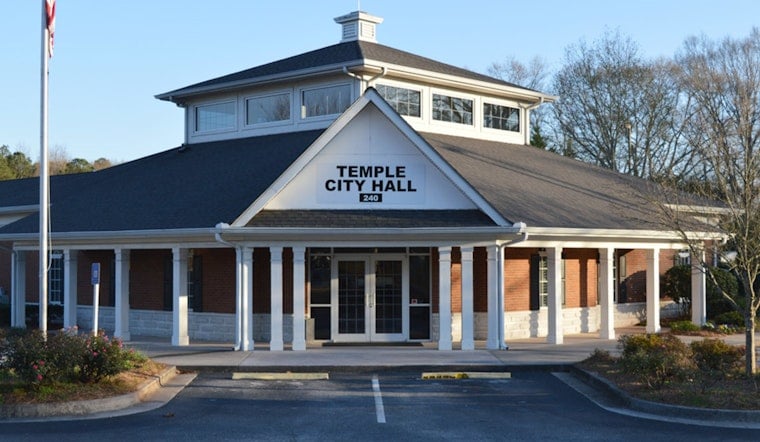
A March 2025 house fire on Enterprise Drive did more than destroy a single home in Temple. Neighbors say the blaze exposed serious cracks in the city’s water system and raised tough questions about why City Hall kept approving big industrial projects while keeping a freeze on most new homes. What started as a fight over hydrant pressure has turned into a loud debate over safety, growth and who knew what when.
The concerns were laid out in an investigation by Atlanta News First, which reviewed a city-commissioned engineering analysis and council records. According to that memo, the water system "is not operating in accordance with the City's own standards and requirements" and "does not consistently provide the necessary flows and pressures to adequately support fire protection." Flow tests showed some hydrants producing roughly 418 to 699 gallons per minute at about 20 pounds per square inch, which the report says falls short of minimum requirements.
Fire crews say hydrants underperformed
As the March fire spread along the residential block, firefighters told dispatchers they were "not getting any pressure on this line," according to witnesses. Homeowner Donny Carr lost his house, and a Carroll County firefighter later warned city leaders that the hydrant on that street "did not provide enough [gallons per minute]." Those interviews and dispatch recordings were documented in local reporting, as reported by WTOC.
Residents: approvals continued despite moratorium
Temple’s city council imposed a residential building moratorium in January 2025 to investigate "water supply issues." Even so, records show the council later signed off on two industrial sites totaling about 131 acres, including a proposed 100,000-square-foot building near existing neighborhoods. Neighbors say they were never told about an August 2025 engineering memo that found the system lacking and have demanded that the council explain why those projects moved ahead anyway, according to Atlanta News First.
City response: modeling, meetings and limited comment
Mayor Michael Johnson declined an on-camera interview but, according to city records, invited residents to bring questions to public meetings. Council members also approved up to $40,000 for a "water model" designed to map flows and pinpoint fixes. In addition, the council voted to extend the residential-and-high-water-use moratorium through October 7, 2026, per the Temple City Council. Those moves are intended to give engineers time to test options and recommend infrastructure work, according to the Temple City Council.
Regional context: aging plants and fragile pressure
Temple’s worries are unfolding against a larger backdrop of water-system stress across metro Atlanta. In late May, an internal power failure at the Hemphill Water Treatment Plant triggered a downtown boil-water advisory and temporary low-pressure reports, a reminder of how quickly outages can ripple through basic services. Details of that advisory and the city’s sampling and testing were reported by The Atlanta Journal-Constitution.
In Temple, residents and firefighters are now pushing for the full engineering memo to be released, for hydrant-flow test results to be made public and for an independent review before any major new approvals move forward. City officials say they are building the water model and scheduling public meetings. Neighbors, however, say they want a clear timeline and concrete fixes in place before the city throws open the doors to more development.





