

























































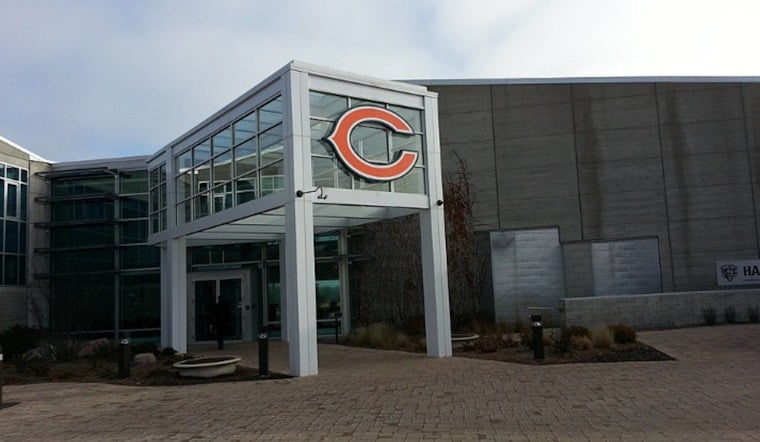
McCook officials took a road trip to Halas Hall this week, hand-delivering letters that pitch a former quarry on the village’s edge as the Chicago Bears’ next home turf. The vision: a climate-controlled, domed arena on roughly 150 acres along 55th Street and East Avenue, built by the team and then transferred to village ownership under a token $1-a-year lease. Village leaders freely admit the proposal is a long shot, but say it is designed to keep the land’s future in local hands instead of turning it over to outside developers.
The southeast corner of 55th Street and East Avenue is a filled-in quarry currently owned by Vulcan Materials. Mayor Terrance Carr told reporters the company has listed the tract for sale and that he expects an asking price near $160 million, according to Des Plaines Valley News. Carr and other village officials say McCook’s proximity to Interstates 55 and 294 is a major selling point for any large-scale development, and that the village board has formally backed the outreach. The letters were addressed to team chairman George McCaskey and CEO Kevin Warren and were hand-delivered to the Bears’ Lake Forest headquarters.
McCook’s pitch asks the Bears to build an 80,000-seat domed stadium on the quarry site and then turn over ownership to the village, with the team paying $1 per year in rent. Under that setup, the facility would be publicly owned and, village officials argue, exempt from property taxes. As reported by 97X, Carr said the village would look at other large-scale options if the Bears say no, describing the parcel as “prime real estate.” McCook officials acknowledge the plan is audacious, but say the move is about trying to guide how the property is used if and when it changes hands.
Where the Bears stand
The overture lands as the Bears continue a very public site search after Illinois lawmakers failed to pass a stadium incentives bill this spring, leaving Arlington Heights and Hammond, Indiana, among the main options on the table. The team has said it is finalizing evaluations of Arlington Heights and a publicly backed plan in Hammond and will provide an update when a decision is reached, according to AP News. Meanwhile, Indiana lawmakers have moved quickly to create a Northwest Indiana stadium authority around Wolf Lake in Hammond, turning up the competitive heat on Illinois officials; the Chicago Sun-Times has tracked those developments.
Local infrastructure worries
Even if the land can be assembled, neighbors and nearby towns say the surrounding corridor would need serious upgrades to handle game-day crowds and major events. Public debate around 55th Street has highlighted safety concerns, traffic backups and past closures tied to the quarry footprint, and local reporting notes that diverting traffic from Joliet Road years ago pushed more vehicles onto 55th and East. Those long-running planning headaches, along with the likelihood of costly intersection and utility work, are among the practical obstacles officials say would need to be solved before any stadium blueprint could move ahead, as reported by Suburban Chicagoland.
Legal and tax questions
Carr has argued that a publicly owned stadium would be exempt from property taxes, but legal experts and state lawmakers note that tax status depends on how ownership, financing and any governing authority are structured. Illinois legislation and draft authority bills show that property held by a designated public authority can be declared public property and exempt from state and local taxes, but that designation requires specific statutory authority and follow-up administrative steps. Text from a proposed authority bill underscores that any exemption language would be baked into the legal framework that creates the public entity, meaning the tax question would ultimately be decided in Springfield rather than in McCook alone; see related language from the Illinois General Assembly.
What happens next will likely be decided at the state and team level. McCook says it plans to keep making its case, while the Bears have signaled they will update the public once they wrap up site evaluations and as broader negotiations in Springfield and Indianapolis play out. For now, the village’s pitch is the latest example of how suburbs and neighboring states are jockeying to shape the franchise’s future while the team conducts its due diligence and officials weigh infrastructure and legal hurdles. The Bears have said they will provide an update when they have a decision, per AP News.





