

























































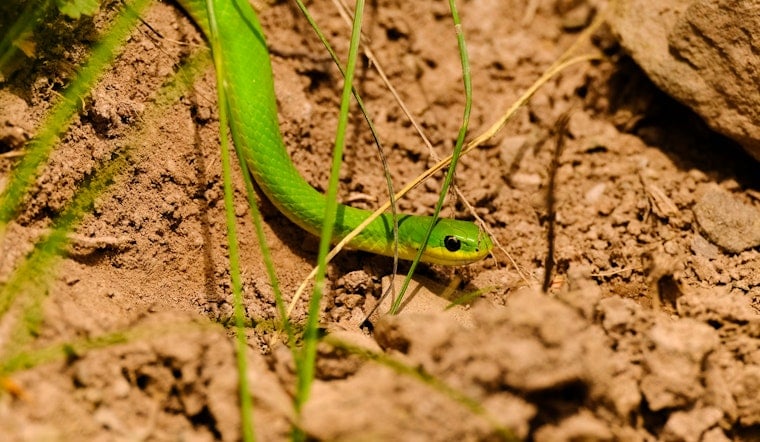
Once a quiet fixture in Illinois prairie grasses, the smooth greensnake is now battling a double threat across the Chicago region: toxic metals turning up in nesting soil and eggs, and a disease-causing fungus that is turning up in snakes themselves. Conservationists worry the combo could make it much harder to incubate, raise and release hatchlings into restored prairies.
Study Flags Heavy Metals and Fungal Infections
According to WBEZ, a research team led by Allison Sacerdote‑Velat of the Peggy Notebaert Nature Museum sampled nests, soils and snakes at sites across Cook, DuPage and Lake counties. They found heavy metals in both soils and eggshells, including arsenic, copper, iron and lead, and detected the fungus Ophidiomyces ophiodiicola in some snakes. The study’s authors say those two stressors together could cut egg survival and leave already fragile populations more vulnerable to disease.
“Persistence of these pollution sources may impact egg survival rates, and disease susceptibility,” Sacerdote‑Velat told WBEZ. The team also reported that a Southeast Side urban, post‑industrial park still holds a remnant greensnake population, but with the highest lead concentrations in soils and eggshells of any surveyed site, a declining density and a sex ratio now heavily tilted toward males.
Why The Fungus Matters
Ophidiomyces ophiodiicola, the fungus tied to snake fungal disease, can trigger skin lesions, swelling and weakened immune function and has been associated with serious declines in some snake species, according to the U.S. Geological Survey. The smooth greensnakes in this study were often asymptomatic, but wildlife health experts note that the fungus now showing up in multiple preserves raises red flags about long-term, cumulative impacts when added to pollution and shrinking habitat.
How Conservationists Are Responding
The Peggy Notebaert Nature Museum has been incubating and “headstarting” smooth greensnake eggs to bolster wild populations. The museum reports about a 98% hatching success rate in incubated clutches and, since 2017, has incubated, hatched and released more than 1,400 juveniles into northern Illinois prairies, according to the museum’s research pages. Local partners, including the Lake County and DuPage County forest preserve districts, have received most of those snakes, and officials say additional supplementation projects are lined up for this summer, per the Chicago Sun‑Times.
State Review And A Protection Push
Dr. Sacerdote‑Velat also led a formal petition to the Illinois Endangered Species Protection Board to list the smooth greensnake as threatened, a move that would trigger added safeguards for its habitat and for how the species is handled. Public hearing documents and the state’s written responses show that the Department of Natural Resources and technical advisers pointed to gaps in regional data and recommended more surveys before issuing a final ruling for the entire state, according to Illinois DNR.
What This Means For Prairie Restoration
For land managers, the new findings shift how release sites are picked. Testing soils for contamination and screening for pathogens are now part of the checklist before any greensnakes are moved into a restored grassland. That strategy mirrors broader work on the “drivers of decline” for grassland wildlife, including research funded by the Morris Animal Foundation that examines disease, habitat fragmentation and other pressures on smooth greensnakes.
Conservationists say headstarting and careful site selection remain their strongest tools to keep these small, insect‑eating snakes in local prairies. Long-term recovery, they caution, will also depend on cleaner soils, ongoing health and habitat monitoring and coordinated management across multiple preserves. The museum and its partners plan to keep surveying nests and releasing headstarted snakes while researchers continue sorting out how pollution and pathogens interact in this already stressed species.





