

























































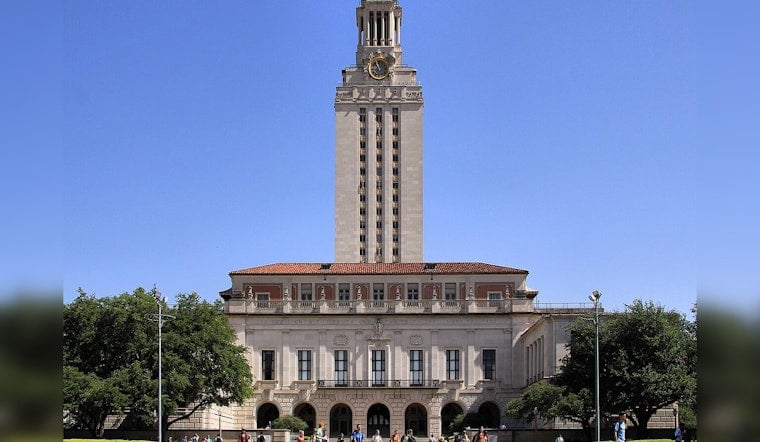
Allan H. MacDonald, a theoretical physicist at the University of Texas at Austin, is one of three scientists set to receive the 2026 Kavli Prize in Nanoscience for founding twistronics, a field built on a 1.1 degree “magic angle” twist between sheets of graphene. The work showed that tiny rotations between atom-thin layers can create flat electronic bands and unlock superconductivity, magnetism and other exotic states. MacDonald will share the prize with experimentalists Pablo Jarillo‑Herrero and Eva Y. Andrei, whose intertwined theory and experiments reshaped how condensed‑matter physicists think about two‑dimensional materials. For UT’s physics community, the announcement is being treated as a major scientific win.
The Norwegian Academy of Science and Letters announced the award and said the laureates were honored “for foundational work that established the field of Twistronics.” The three will share a $1,000,000 prize and are scheduled to receive their medals in Oslo this September, according to the Kavli Prize.
UT Austin quickly celebrated the recognition, noting that MacDonald is the first Texas‑based researcher to win the Kavli in the nanoscience category. “Allan MacDonald’s curiosity and ambition have unlocked extraordinary possibilities,” UT President Jim Davis said, according to UT Austin.
What the magic angle is
The theoretical spark for twistronics came when MacDonald and then postdoc Rafi Bistritzer showed that rotating two graphene sheets by about 1.1 degrees could flatten electronic bands and produce strong electron correlations. That prediction appeared in a 2011 paper in the Proceedings of the National Academy of Sciences by Rafi Bistritzer and Allan H. MacDonald, providing the mathematical framework that later experiments would put to the test.
How labs proved it
Experimental confirmation followed in 2018, when Pablo Jarillo‑Herrero and colleagues fabricated devices twisted to the “magic” angle and observed correlated insulating phases together with unconventional superconductivity. Those landmark results were published in Nature and set off a global wave of research into moiré materials and flat‑band physics.
Why twistronics matters
The Kavli committee described twistronics as “a new paradigm in nanoscience” that uses geometric alignment as a tuning knob to engineer electronic behavior instead of changing chemistry. That geometric control has suggested pathways toward more efficient electronics, tunable quantum platforms and materials whose properties can be switched by simple structural manipulation, according to the Kavli Prize.
What it means for UT Austin
For UT Austin, the award highlights research the university says was powered by campus resources that include the Texas Advanced Computing Center and long‑term investment in condensed‑matter work. The recognition is expected to raise the profile of local materials research and help attract students, partners and funding, the university told reporters in its announcement, according to UT Austin.
MacDonald will join Jarillo‑Herrero and Andrei to accept the award at the Kavli ceremony in Oslo this September, with the three laureates splitting the $1,000,000 honorarium. MIT News also highlighted Jarillo‑Herrero’s experimental role and the field‑wide excitement over twistronics when reporting on the selections.





