

























































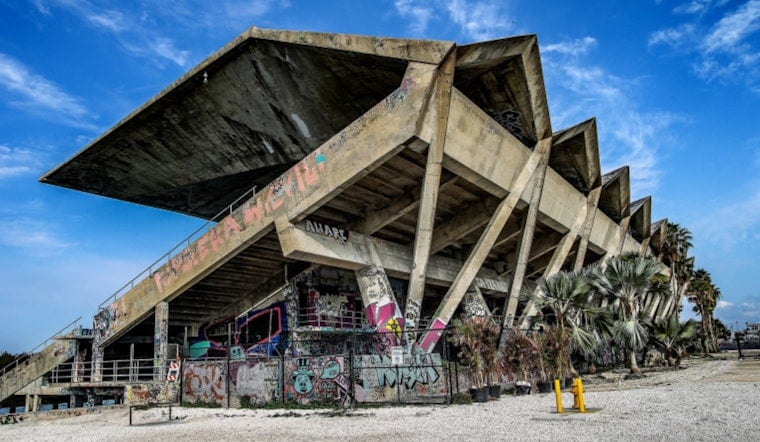
Miami’s long-running tug-of-war over who controls the Virginia Key marinas is about to hit the ballot box. On Thursday, city commissioners are set to decide whether an $80 million plan to overhaul the long-neglected, city-owned waterfront should go to voters, a move that could finally end years of legal and political trench warfare.
The proposal would hand a private operator the job of modernizing aging docks, building large dry-storage towers, adding new restaurants and retail, and expanding public parking at the Rickenbacker and Marine Stadium marinas. If commissioners greenlight the measure, Miami voters would get the final word on the long-term deal.
According to The Real Deal, the development group, operating as Virginia Key LLC, is a joint venture between Miami Beach-based RCI and Dallas-based Suntex Marinas and would lease about 27.6 acres of city land. The proposed ground lease would run 45 years with two 15-year renewal options, stretching the potential term to 75 years. Reporting says the arrangement would guarantee the city at least $2.2 million in base rent each year, plus 6 percent of gross revenues, and city estimates cited in the piece put base rent at about $204 million over the initial 45-year period.
The fight traces back to a 2015 request for proposals and a second RFP in 2017, both of which bogged the commission down in protests, lawsuits and delays, with voters already dragged into the fray once before. As reported by the Miami Herald, Miami-Dade Circuit Judge Alan Fine previously ordered new referenda after finding commissioners showed favoritism in earlier decisions, and a competing ballot measure was rejected by voters in 2021.
What the proposal would build
City records cited in reporting describe a three-phase buildout that would significantly increase dry and wet boat storage while layering in new commercial space and public access.
According to The Real Deal, phase one calls for a mixed-use building with 282 dry boat slips, renovations to roughly 19,000 square feet of existing commercial space, relocation of the dockmaster’s office and additional parking.
Phase two would add about 180 more dry slips, for a total of roughly 462, along with 40 wet slips and 5,000 square feet of new commercial space. The final phase would push dry capacity to about 750 slips, add 162 wet slips and another 8,000 square feet of commercial space, and expand parking to around 630 spaces. At least 220 of those spots would be reserved for the neighboring Rusty Pelican restaurant.
Why it matters
Supporters argue the marinas are running on outdated infrastructure and that private capital and management are needed to bring the waterfront up to modern standards. City filings say the project would help carry out elements of the Virginia Key master plan, tying the marina overhaul to broader long-term planning for the island.
The properties in play stretch across multiple Rickenbacker Causeway addresses that have shown up in previous lease talks and ballot language. According to Suntex Marinas, the company is headquartered in Dallas, underscoring the national-scale private player Miami would be partnering with on its public shoreline.
What happens next
Commissioners are scheduled to vote Thursday on whether to send the proposal to the ballot. If they say yes, voters will effectively decide the fate of a multi-decade lease on some of Miami’s most coveted public waterfront.
Given past court rulings and earlier ballot defeats, the move carries legal as well as political risk. Opponents have repeatedly questioned whether locking up public land under a long-term lease is appropriate for a site like Virginia Key, a concern that has surfaced again and again in coverage by the Miami Herald.





