

























































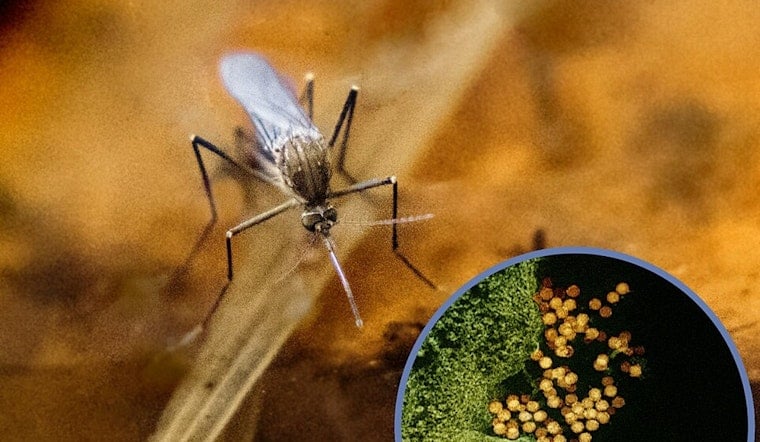
West Nile virus has turned up in multiple dead birds in Newark, and neighbors in southeast Newark say the mosquitoes are out in force. The Alameda County Mosquito Abatement District (ACMAD) is now ramping up surveillance in the area, treating public spaces to cut down on breeding spots, and walking yards and traps in full view. Officials are asking residents to keep an eye out for standing water and to stick to basic bite-prevention habits.
Dead Birds Mark Early Hot Spot In Southeast Newark
The district's West Nile activity tracker shows five WNV-positive dead birds in Newark this season, with one confirmed on May 1, another on May 29, and three more confirmed this week, two on Tuesday and one on Wednesday. The cluster is concentrated southeast of Newark Boulevard and is guiding extra trapping and larval control in that neighborhood, according to the Alameda County Mosquito Abatement District.
Crews Hit Yards, Gutters And Public Spaces
In a recent Facebook update, ACMAD said field crews are out inspecting yards, treating standing water and applying larval controls in public spaces. Staff will be moving through the area in uniform and in white trucks while the work continues. The agency is also urging residents to report dead birds and to contact the district if they are seeing persistent mosquito activity or standing water, as crews step up targeted treatments in the surrounding blocks.
How Newark Fits Into California’s West Nile Season
The California Department of Public Health's weekly arbovirus bulletin shows early-season West Nile activity in several counties and no confirmed human cases yet this year, a reminder that surveillance is still ramping up. Local coverage has stressed that dead-bird detections often show up before infected mosquitoes do, giving vector-control teams a head start on where to trap and treat, as SFGATE has reported.
How Neighbors Can Cut The Risk
Health officials are sticking to the usual playbook: drain or treat standing water around homes, avoid being outside at dawn and dusk when Culex mosquitoes are most active, wear long sleeves and long pants, and use an EPA-registered insect repellent such as DEET, picaridin, IR3535 or oil of lemon eucalyptus. Residents should report dead birds to the state hotline at 1-877-WNV-BIRD and can request inspections or services from the Alameda County Mosquito Abatement District website or by calling (510) 783-7744.
Public health officials say early detections like these give vector crews a chance to aim control efforts before mosquito season peaks. For now, neighbors in southeast Newark are being asked to keep yards clear of standing water and to stay tuned for local updates as the district continues surveillance and treatments.





