

























































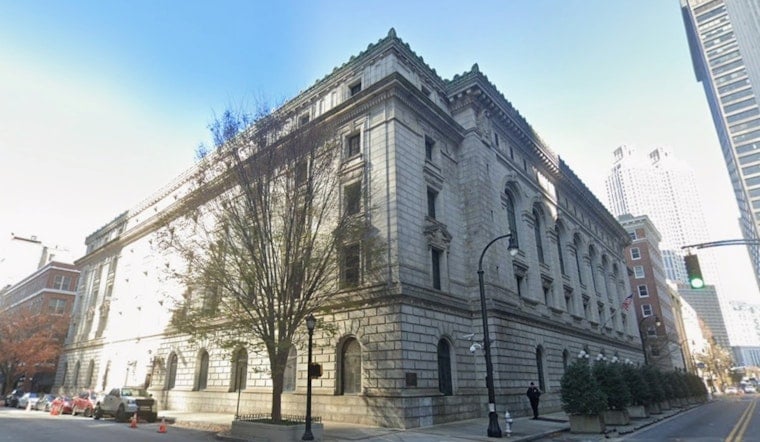
Florida’s effort to control what professors say about race and gender in college classrooms took a major hit on Tuesday, July 7, 2026, when a federal appeals court blocked a key piece of the state’s Stop WOKE education law. A three‑judge panel of the U.S. Court of Appeals for the Eleventh Circuit, in a 2‑1 decision, kept in place a lower‑court injunction that prevents the higher‑education provisions of the statute from taking effect. The ruling directly affects how instructors at public colleges and universities across the state can teach about systemic racism, sexism and related topics.
Judge Britt C. Grant wrote the majority opinion, joined by Judge Charles R. Wilson, while Judge Barbara Lagoa dissented and backed the state’s broader view of its control over classroom content. As Bloomberg Law reports, the majority concluded the challenged provisions amounted to improper viewpoint discrimination when applied to postsecondary instruction. The panel held that while the state may set curriculum, it cannot single out and punish particular viewpoints expressed by faculty.
What the court said
The opinion underscored that states have wide latitude to set broad curricular policies, but that authority runs into constitutional trouble once the government starts drawing lines based on which viewpoints professors may or may not express in class. The panel was careful to cabin its ruling to how the law operates in colleges and universities, explicitly leaving K‑12 applications of the statute for another day. That timing and the panel’s reasoning were detailed in coverage by the Miami Herald.
How the law came to be
The measure at issue, enacted in 2022 as House Bill 7 and formally titled the Individual Freedom Act, spells out eight concepts related to race, gender and identity that it bars from being “promoted” in mandatory trainings or instruction. Opponents have long warned the law would chill classroom debate and undermine academic freedom, and a federal district judge who first blocked its higher‑education provisions famously branded the statute “positively dystopian.” Civil‑liberties groups and faculty members have been challenging the law in court since it was signed. For background on those fights, see analysis from PEN America.
Why this matters for campuses
In defending the law, Florida officials argued that what professors say in state classrooms is essentially government speech, since instructors are paid by the state, and therefore can be tightly controlled by the legislature. Lawyers for the plaintiffs countered that classroom teaching is not the same thing as the university itself speaking and warned that the law would muzzle essential debate. As Courthouse News Service reported, the ACLU told the panel that “the classroom is the marketplace of ideas.” For now, with the injunction intact, the appeals court’s ruling preserves professors’ ability to present contested ideas in public‑college classrooms covered by the order.
Legal fallout and next steps
The case, Pernell v. Fla. State Bd. of Ed., No. 22‑13992 in the Eleventh Circuit, features a lineup of heavyweight legal groups. Attorneys for the professors and students included the ACLU, the NAACP Legal Defense Fund and the Foundation for Individual Rights and Expression, while the state was represented by Cooper & Kirk. Bloomberg Law notes that the panel’s decision does not resolve every provision in the statute and leaves room for additional appeals. Related portions of the law, especially those targeting certain workplace trainings, were already struck down in a separate 2024 decision, as described by FindLaw.
Campus leaders and faculty from Miami to Tallahassee will now be watching closely to see whether the state seeks rehearing or further review, since an en banc petition or a trip to the U.S. Supreme Court could reshape the law’s reach. For the moment, instructors at Florida’s public colleges have more breathing room to teach disputed topics without facing the specific sanctions outlined in the statute. The broader political and legal clash over how race and gender are taught in Florida’s classrooms is far from over and is likely to keep unfolding in court filings and statehouse debates across the state.





