

























































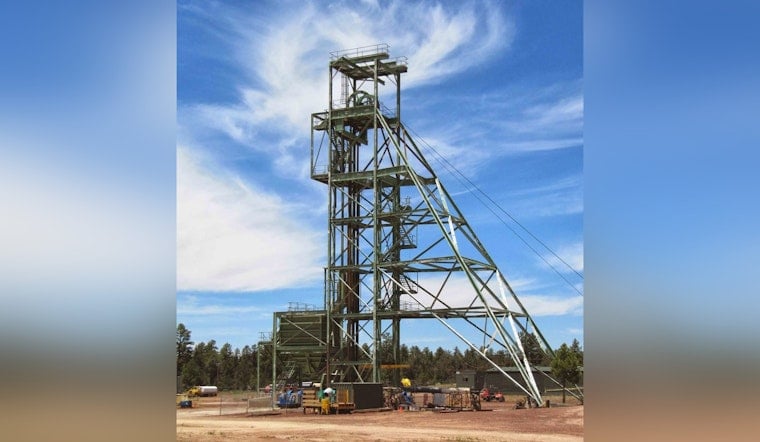
Arizona regulators just signed off on higher allowable arsenic levels at a key groundwater monitoring well at the Pinyon Plain uranium mine south of the Grand Canyon, and the Havasupai Tribe is not having it. The change targets the mine's north monitoring well, MW‑02, and bumps up both the aquifer‑quality limit and the early‑warning alert level after the operator submitted enhanced sampling. Tribal leaders, scientists and conservation groups say the move weakens safeguards for the groundwater that feeds springs and communities downstream, including Havasu Creek, the tribe's only year‑round water source.
According to the Arizona Republic, the Arizona Department of Environmental Quality (ADEQ) raised the aquifer quality limit for arsenic at MW‑02 from 0.050 milligrams per liter to 0.055 mg/L and increased the alert level from 0.040 to 0.050 mg/L. ADEQ's review, as reported by the paper, concluded that the higher readings are naturally occurring rather than the result of pollutants discharged from the mine.
What ADEQ Says And How The Permit Was Tweaked
In its own public notice, ADEQ describes a Changed Application Agreement with Energy Fuels Resources that amends the mine's Aquifer Protection Program permit after monitoring showed a shift in arsenic concentrations the agency says are not due to facility discharges. The department's materials say a hydraulic sink created by the mine shaft is pulling higher‑arsenic groundwater toward perimeter wells, and that the change applies specifically to MW‑02. ADEQ posted the notice on its website and classified the modification as an "other" amendment to the permit. The Arizona Department of Environmental Quality provides the permitting documents and review materials online.
Tribe And Conservationists Push Back
The Havasupai Tribal Council has called ADEQ's decision a betrayal of the tribe's trust in state regulators and warns the move puts Havasu Creek at risk, describing it as the cultural, economic and spiritual heart of the Havasupai people, according to reporting by the Arizona Republic. Chairwoman Melinda Yaiva said ADEQ "could have stood with the Havasu ‘Baaja and the people of Arizona" but instead chose to "lower the bar for pollution," the article reports. Conservation groups echoed the concern, arguing that adjustments to water‑quality limits should come only after thorough independent study.
Scientists And EPA Want More Answers
Independent scientists who reviewed the permit materials told reporters they see Energy Fuels' explanation as a hypothesis that needs more testing before regulators relax limits, and they urged ADEQ to require additional hydrogeologic analysis. KNAU documented technical comments from experts who faulted the company's demonstration and the sampling network. The Environmental Protection Agency's prior technical review of the Pinyon Plain site also concluded that more evaluation is needed to understand aquifer connections and the potential for mining to affect springs that feed downstream communities, according to the EPA.
Energy Fuels' Data And Company Line
Energy Fuels told regulators it had collected multiple years of groundwater data, including enhanced monthly monitoring beginning in January 2025, and argued that the higher arsenic at MW‑02 reflects naturally higher concentrations being drawn toward the mine, not contaminants leaving the site. The company's permit submission and technical reports assert that a widening cone of depression around the shaft explains the readings. Those documents are available through ADEQ.
Legal And Regulatory Stakes In The Canyon's Shadow
Critics warn that once an aquifer is contaminated the damage can be effectively permanent, and advocacy groups argue that permitting tweaks based on what they see as incomplete data create long‑term risk for the Grand Canyon watershed. The Center for Biological Diversity and the Grand Canyon Trust have repeatedly urged state and federal officials to demand stronger monitoring and to consider closure of operations that threaten springs and tribal water sources. The Center for Biological Diversity and the Grand Canyon Trust have published data and statements outlining those concerns.
What Happens Next Around MW‑02
ADEQ says it will continue perimeter monitoring and enforcement under the permit terms while the mine operates, and the agency's documentation remains the primary public record for any appeals or further review. Interest groups, tribal officials and scientists say they will keep pressing for additional wells, independent tracers and transparent data releases so the public can judge whether the state's conclusion holds up over time. For now, the change to MW‑02's limits leaves regulators and nearby communities keeping a close eye on the well that sits below a mine less than 10 miles from the South Rim. More information is available from ADEQ.





